
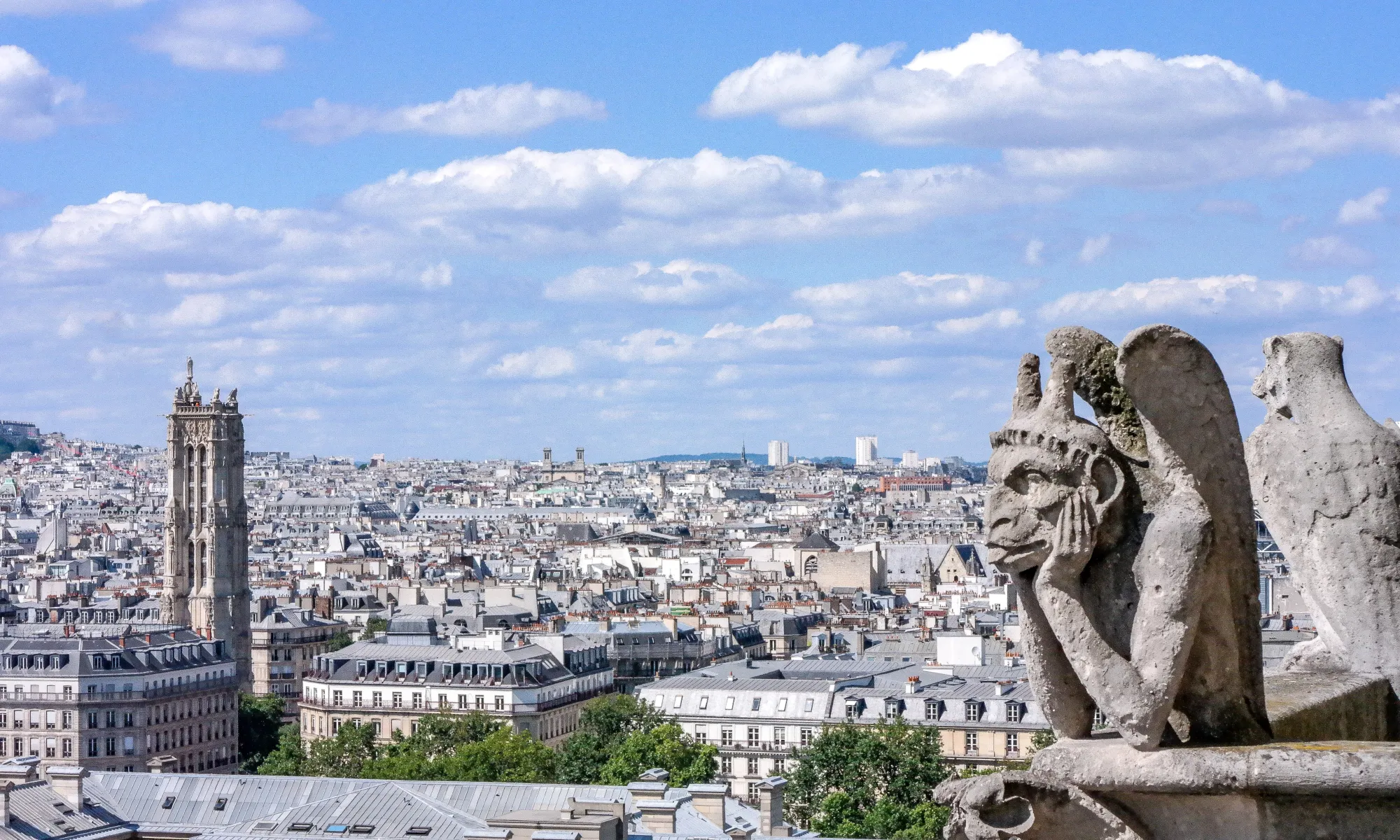
Visiting Paris, you might find yourself drawn to Notre Dame, only to discover it still veiled in scaffolding, years after the devastating 2019 fire. It’s easy to see a construction site and miss the millennia of stories held within its stones. Yet, truly appreciating Notre Dame means looking beyond the current restoration to its profound historical and architectural narrative.
The Challenge of Reimagining Notre Dame’s Legacy
For many, the image of Notre Dame today is intertwined with the devastating fire of April 2019. It’s a powerful, almost haunting sight: a monument of unparalleled historical weight undergoing a massive, meticulous reconstruction. How do you connect with a landmark that is largely inaccessible, covered by protective netting and surrounded by cranes? The challenge isn’t just seeing the physical structure; it’s understanding its spirit, its journey, and its unwavering place in the heart of France, even as it heals.
This isn’t merely a building; it’s a living testament to centuries of Parisian life, a canvas of French history. From royal coronations to revolutionary fervor, Notre Dame has stood as an unyielding witness. Ignoring its current state would be to miss a crucial chapter in its long story. Instead, we must engage with it, understanding the painstaking efforts involved in bringing it back, and appreciating the historical moments that shaped it long before the fire.
The reconstruction itself is a monumental feat of engineering and historical preservation, demanding techniques both ancient and modern. It’s a dialogue between past craftsmanship and future resilience, offering a unique lens through which to view not just the cathedral, but the very concept of heritage.
The 2019 Fire: What Was Lost
On April 15, 2019, the world watched in horror as flames engulfed the cathedral’s roof and spire. The wooden roof structure, known as ‘the Forest’ due to its dense timber framework, was entirely consumed. The iconic 19th-century spire, designed by Eugène Viollet-le-Duc, collapsed dramatically, sending a plume of smoke and debris into the Parisian sky. While the main stone structure largely survived, significant damage occurred to the vaults, some collapsing, and a huge volume of water used to douse the flames added to the structural stress. Priceless artifacts and stained-glass windows were thankfully saved or protected, but the immediate architectural loss was immense, leaving a gaping wound in the city’s skyline.
The fire didn’t just consume wood and lead; it threatened millennia of accumulated history. The emotional impact on Parisians and global heritage enthusiasts was profound. The scale of the damage spurred immediate global pledges of support, recognizing Notre Dame not just as a French treasure, but a symbol for all humanity.
Restoring the Spirit: Key Milestones in the Reconstruction
The restoration has been a complex, multi-phased endeavor. Initial efforts focused on securing the structure, removing debris, and shoring up vulnerable walls and flying buttresses. This phase, involving a giant scaffolding structure, was critical to prevent further collapse. By early 2021, the arduous task of removing the melted scaffolding that had fused to the cathedral’s stone had been completed. Since then, reconstruction has moved swiftly. The new oak timber framework for the nave and choir has been erected, replicating ‘the Forest’ using medieval techniques and tools. The new spire, designed to be an exact replica of Viollet-le-Duc’s original, began rising again in early 2024, a powerful symbol of rebirth. The cathedral is slated to reopen to the public in December 2024, a testament to incredible dedication and skill.
Craftsmen from across France, using traditional methods, are meticulously recreating elements down to the finest detail. The grand organ, composed of 8,000 pipes, has been completely dismantled, cleaned, and is being reassembled. This isn’t merely repair; it’s a careful, respectful reawakening of a masterpiece.
Architectural Styles: A Journey Through Time
Notre Dame de Paris is a masterclass in evolving Gothic architecture, not a monolithic structure but a tapestry woven over centuries. Its construction began in 1163 under Bishop Maurice de Sully, extending well into the 14th century. This long build time means the cathedral showcases various phases of the Gothic style, from its early, robust beginnings to its more ornate, light-filled later expressions. Understanding these shifts helps us appreciate the complexity embedded in its very stone.
The cathedral’s design, revolutionary for its time, incorporated innovations like the flying buttress, which allowed for thinner walls and larger windows, bathing the interior in light. It also features three magnificent rose windows, each a distinct masterpiece of stained glass. Examining these elements closely reveals not just architectural prowess but a philosophical shift towards divine light and transcendence.
Romanesque Foundations vs. Gothic Innovations
While primarily Gothic, Notre Dame’s earliest phases still bear the echoes of Romanesque massiveness, particularly in the lower parts of its western façade. Romanesque churches emphasized thick walls, rounded arches, and smaller windows, creating dark, introspective spaces. Gothic architecture, conversely, sought to reach for the heavens, employing pointed arches, ribbed vaults, and most famously, the flying buttress to distribute the weight of the roof outwards, allowing for soaring heights and vast expanses of stained glass.
Notre Dame marks a crucial transition. Its early construction, though Gothic in intent, still shows a certain heaviness. As builders learned and techniques advanced, later additions and modifications embraced more refined Gothic principles, pushing the boundaries of what stone could achieve. This internal evolution within a single structure makes Notre Dame a living textbook of architectural development.
Rayonnant Flourishes and the Western Façade
The Western Façade, with its three grand portals, often steals the show. But it’s the later additions and embellishments, particularly in the Rayonnant style of Gothic, that showcase an increasing emphasis on light and linear elegance. The Rayonnant period (mid-13th to mid-14th century) is characterized by a refinement of earlier Gothic forms, focusing on intricate tracery, larger windows, and a more unified, open interior space. While Notre Dame’s core is Early Gothic, elements like the transept rose windows and some chapels exemplify Rayonnant’s delicate precision.
The details on the Western Façade, from the Gallery of Kings to the intricate carvings on the portals, reflect this evolving aesthetic. Even the gargoyles, originally functional as rainwater spouts, became increasingly elaborate, blending the grotesque with the artistic. Observing these elements, visitors trace a journey through nearly two centuries of architectural and artistic ambition.
Here’s a simplified comparison of key architectural elements present in Notre Dame:
| Feature | Early Gothic (c. 1160s-1200s) | Rayonnant Gothic (c. 1230s-1300s) |
|---|---|---|
| Vaulting | Six-part ribbed vaults (initially) | Four-part ribbed vaults (later additions, transept) |
| Wall Thickness | Thicker, more substantial | Thinner, more open; emphasis on glass |
| Windows | Smaller, paired lancets; early rose windows | Larger, more elaborate rose windows (e.g., North & South transept), intricate tracery |
| Flying Buttresses | Introduced, initially heavy and experimental | Refined, lighter, more aesthetically integrated |
| Overall Impression | Robust, powerful, ascending | Elegant, luminous, delicate, unified space |
| Example Area | Lower nave, western façade base | Upper nave, transept, sacristy chapels |
Experiencing Notre Dame: What to See Now and What’s Coming
Even amidst the ongoing restoration, Notre Dame remains a powerful presence on the Île de la Cité. It’s a different kind of visit than before the 2019 fire, but no less meaningful. Instead of walking inside, visitors must embrace an external perspective, focusing on the exterior details and the surrounding area that speaks volumes about the cathedral’s enduring legacy. This phase offers a unique opportunity to witness history in the making, observing the meticulous work of artisans and engineers.
Planning your visit involves knowing where to stand, what details to look for, and how to immerse yourself in the historical context that radiates from its very location. The experience is about observation and anticipation, a forward-looking journey into its eventual rebirth.
Key Viewpoints and External Details
- The Western Façade from Place Jean-Paul II: This remains the most iconic view. Even with scaffolding, you can appreciate the sheer scale, the three grand portals, and the two massive towers. Look for the intricate carvings that tell biblical stories, and imagine the statues in the Gallery of Kings before they were restored or replaced.
- The Northern and Southern Sides from the Seine Embankments: Take a walk along the riverbanks to appreciate the cathedral’s length and the complex system of flying buttresses. From this vantage point, you can better see the progress on the roof and the rising spire, a truly inspiring sight.
- The Archeological Crypt of Notre Dame: Located directly under the parvis (square) in front of the cathedral, this often-overlooked museum offers a fascinating look at the layers of Parisian history unearthed beneath the square. You’ll see Roman ruins, medieval foundations, and explanations of Notre Dame’s construction, providing essential context to what stands above. Entry is around €9.
- The Île de la Cité: Explore the island itself. It’s the historical heart of Paris, home to Sainte-Chapelle (another Gothic masterpiece with breathtaking stained glass) and the Conciergerie. Understanding the island’s history helps place Notre Dame within its original urban fabric.
Anticipating the Interior’s Reopening
The official reopening is slated for December 2024. When the doors finally open, the experience will be transformative. Visitors can expect:
- Restored Nave and Transepts: The main body of the cathedral will be visible again, showcasing its restored vaults and cleaned stonework.
- Reinstalled Spire: The interior base of the new spire will likely be a point of fascination, a symbol of recovery.
- The Organ’s Return: The grand organ, after its extensive cleaning and reassembly, will once again fill the space with its majestic sound.
- Exhibitions: Expect new interpretive exhibits detailing the fire, the restoration process, and the cathedral’s history, offering deeper insights for visitors.
- Enhanced Accessibility: Modern updates are likely to improve the visitor experience, though specifics are still being finalized.
The reopening will mark not just the return of a landmark, but a moment of collective celebration and reflection on human ingenuity and perseverance. It’s a chance to witness history, not just read about it.
The Heart of Paris: More Than Stone and Stained Glass
Notre Dame de Paris is more than just an architectural marvel or a historical site. It’s the beating heart of Paris, a place where centuries of spiritual devotion, cultural identity, and civic life converge. Its presence anchors the city, transcending its physical form to embody the very soul of France.
Why Notre Dame’s Future Matters Beyond Tourism
It’s tempting to view Notre Dame solely through the lens of tourism, a bucket-list item for visitors to Paris. But to do so misses the profound, multifaceted significance of its continued existence and reconstruction. My strong belief is that Notre Dame’s future is critical, extending far beyond the economic benefits of visitor numbers; it represents a commitment to shared heritage, a testament to human resilience, and a living debate about preservation itself. This isn’t just about rebuilding a church; it’s about reaffirming core values.
The decisions made during its reconstruction set precedents for future heritage projects worldwide. The choice to rebuild a historically accurate spire, for example, over a modern design, reflects a specific philosophy of preservation. These are not minor details; they are statements about how we honor the past and prepare for the future.
A Symbol of Resilience and European Identity
Notre Dame has weathered revolutions, wars, and now, a catastrophic fire. Each time, it has risen again, demonstrating an extraordinary capacity for resilience. This makes it a powerful symbol, not just for France, but for Europe and the world. Its rebuilding is a collective act of defiance against destruction, a statement that beauty and history will endure. It embodies the enduring spirit of artistic creation and spiritual endeavor that defines much of Western civilization.
Its location on the Île de la Cité, the historical cradle of Paris, only strengthens this symbolism. It has witnessed the ebb and flow of empires, the birth of democracies, and countless moments of both triumph and tragedy. Its recovery isn’t just a national project; it resonates with a broader European identity, linking generations through shared cultural touchstones.
The Ongoing Debate: Restoration Choices and Their Impact
The restoration has sparked considerable debate among architects, historians, and the public. Key discussions include: Should the reconstruction be an exact replica, or should it incorporate modern interpretations? The decision to rebuild the spire exactly as Viollet-le-Duc designed it, using traditional materials like oak and lead, reflects a strong commitment to historical authenticity. However, debates around interior lighting, seating, and even the surrounding landscaping, highlight the tension between strict historical preservation and adapting for contemporary use.
For instance, there have been proposals for modern art installations or a more minimalist interior design, which were largely rejected in favor of a faithful restoration. These debates underscore the immense responsibility that comes with restoring such a globally significant monument. Each choice carries weight, influencing not only the physical appearance of the cathedral but also its interpretation and legacy for centuries to come. The process itself is a living lesson in cultural stewardship, navigating tradition, innovation, and public expectation.
As Notre Dame prepares to open its doors again, it stands as a testament to profound human dedication and an unwavering belief in the power of heritage. Its future, like its past, will continue to inspire and challenge us to look deeper, beyond the immediate façade, into the enduring spirit of human endeavor.