
The common assumption about Macau is that any big casino hotel will do. Book something recognizable on the Cotai Strip, show up, and you’re set. That reasoning holds only if your sole goal is gaming floor access. It falls apart fast once you realize you’ve spent three nights inside a resort that happens to be in Macau rather than actually being in Macau — and that the hotel you picked put you 20 minutes by taxi from everything worth seeing.
Macau’s hotel market is genuinely complex. Two geographically distinct zones. Pricing that swings 80% between a Tuesday and a Saturday during a mainland Chinese public holiday. Properties ranging from legitimate architectural landmarks to overpriced mediocrity with better marketing. The decision matters more than most travelers treat it.
The Geography You Need to Understand Before Booking Anything
Most booking platforms list Macau properties without making the zone distinction clear. That omission causes real problems.
Macau operates in two physically separate areas connected by bridges and a network of free hotel shuttles. The older Macau Peninsula holds the historic city — the UNESCO-listed quarter, the colonial architecture, the Macanese restaurants that have been operating since before most of the Cotai hotels were built. The Cotai Strip is reclaimed land, built between two islands in the Pearl River Delta, and it is purpose-built for resort tourism at a scale that Las Vegas genuinely doesn’t match.
These are not interchangeable options with minor trade-offs. Your choice between them determines the character of your entire trip.
What You Actually Get on the Cotai Strip
The Venetian Macao has 3,000 suites and a 550,000-square-foot casino floor. Galaxy Macau built a 150,000-square-foot outdoor wave pool complex. MGM Cotai constructed a 24-meter-high atrium it markets as “The Spectacle.” These are casino destinations that also have hotel rooms — not the other way around.
If the resort experience is the point — the pools, the restaurants, the gaming, the sheer engineered scale of it — Cotai earns its reputation. The Four Seasons Hotel Macao connects directly to the Venetian via a covered walkway and shares certain amenities with the larger property. At $300–$500/night, you are effectively buying access to two properties’ facilities, which changes the value math significantly.
The cost: cultural distance. You can spend four full days on the Cotai Strip and never actually experience Macau. The Historic Centre — the Ruins of St. Paul’s Cathedral, the Guia Fortress, Senado Square — is a $12 taxi ride away. Not prohibitive, but it adds up across a three-night stay, and the distance is psychological as much as physical.
Why the Macau Peninsula Still Makes Sense
The Peninsula is the original city. Narrow streets with Portuguese tiles. Temples from the 16th century. Egg tart shops that have been operating for decades. And hotels that are smaller, more restrained, and often better value for travelers whose Macau trip isn’t organized around a gaming floor.
Mandarin Oriental Macau is the Peninsula’s definitive luxury pick for non-gamblers. 213 rooms, no casino embedded in the property, walking distance to the inner harbor. The spa is among the best in the region — book the couples’ treatment room in advance, not just a standard session. Rates start around $280/night. For a Mandarin Oriental property in a major Asian destination, that is not gouging. The absence of a casino floor means no navigating crowds to reach the elevator bank at midnight, which sounds like a small thing until you’ve done it the other way.
Wynn Macau also sits on the Peninsula — two towers, Wynn and Encore at Wynn Macau — with standard rooms starting around $220/night. The casino is there, but the surrounding neighborhood is walkable, the restaurants are serious, and the property doesn’t require you to surrender to the resort bubble the way Cotai properties do.
Bottom Line on Location
Sightseeing, Portuguese food, and cultural history: Peninsula. The resort as the destination: Cotai. Three or more nights: consider splitting — one night on the Peninsula to get your bearings, then move to Cotai. Free shuttles between the ferry terminal, the airport, and every major hotel make the transfer easy.
Eight Properties Compared: Real Numbers, No Marketing Language
Prices below are approximate weeknight USD rates for a standard room in 2026. Weekend and Golden Week surges can push Cotai properties 60–80% above these figures — that is not a minor fluctuation.
| Hotel | Zone | Weeknight Rate (USD) | Casino | Best For |
|---|---|---|---|---|
| Morpheus (City of Dreams) | Cotai | $350–$600 | Adjacent, not inside | Architecture and design travelers |
| Four Seasons Hotel Macao | Cotai | $300–$500 | Connected to Venetian | Luxury couples, honeymoons |
| Grand Lisboa Palace | Cotai | $250–$450 | Yes | Fine dining, Robuchon restaurants |
| Mandarin Oriental Macau | Peninsula | $280–$420 | No | Non-gamblers, spa seekers |
| Wynn Macau | Peninsula | $220–$380 | Yes | Gambling plus city walkability |
| The Venetian Macao | Cotai | $150–$300 | Yes | First visits, families, groups |
| Galaxy Macau | Cotai | $150–$280 | Yes | Pool access, family trips |
| Sofitel Macau at Ponte 16 | Peninsula | $120–$200 | Yes | Budget-conscious, inner harbor proximity |
The Currency Math That Catches Travelers Off Guard
Macau uses the Pataca (MOP), but Hong Kong Dollars are accepted at a 1:1 rate almost universally. USD converts at roughly 8 MOP to the dollar. When a hotel quotes MOP 2,400 per night, that reads like a deal at first glance. It is $300 USD. Hotel booking sites often display rates in MOP or HKD without clear conversion — cross-check against your card’s currency before assuming you’ve found an underpriced property.
The Morpheus Is the Most Interesting Hotel Building on Earth Right Now
No hedging here: if design matters to how you experience a destination, Morpheus Hotel at City of Dreams is the most architecturally significant hotel in Macau. Zaha Hadid Architects completed it in 2018, and the exoskeleton — a continuous steel-and-glass surface with two void tunnels running vertically through the tower — has no equivalent in hospitality anywhere. Standard rooms start around $350/night. The City of Dreams casino complex is adjacent but not embedded inside the hotel, meaning you can stay there and largely ignore the gaming floor if that’s not your interest. The pool deck and guestroom interiors justify the rate even if you set aside the architecture entirely.
Bottom Line: Not the best value per dollar in Macau. The most memorable property in the city for travelers who consider where they sleep part of the experience.
Four Booking Mistakes That Actually Cost You Money
These patterns come up consistently among travelers comparing notes after Macau trips.
- Choosing a Cotai hotel when your itinerary is Peninsula-heavy. A-Ma Temple, the Guia Fortress, the old Portuguese quarter — all Peninsula. If that’s where you’re spending your days, staying on the Cotai Strip means $15–$25 in round-trip taxis per outing. Three days of that erases any perceived savings from a lower room rate. Map your actual itinerary before comparing hotel prices across zones.
- Ignoring the free shuttle network entirely. Every major casino resort in Macau runs free shuttles from the ferry terminal, Macau International Airport, and the border gate crossings — and between Cotai properties. The Venetian, Galaxy, MGM Cotai, Morpheus, and Wynn all operate frequent services. Travelers who don’t know this pay for taxis at every transfer. Check the shuttle schedule on your hotel’s site before arrival; the savings across a three-night stay add up to real money.
- Paying for a suite upgrade that delivers nothing specific. The Venetian Macao’s base room is already a 74-square-meter suite — that is the standard configuration, not an upgrade tier. Paying $100–$150 more per night for a “Bella Suite” gets you a marginally larger version of what you already have. At the Four Seasons Macao, upgrading to a Cotai Suite gets you direct terrace access to the pool — that’s genuinely different. Understand what the upgrade actually changes before clicking confirm.
- Booking Friday or Saturday without checking the rate spread. Cotai pricing on weekends and mainland Chinese public holidays is not a modest premium. A Wednesday night at Galaxy Macau can run $160. The same room type on a Saturday during Lunar New Year: $380 or higher. If your schedule has any flexibility, shifting arrival to Monday or Tuesday cuts meaningful costs on longer trips.
Which Hotel Actually Fits Your Trip?
First visit to Macau with 2–3 nights and no strong preference?
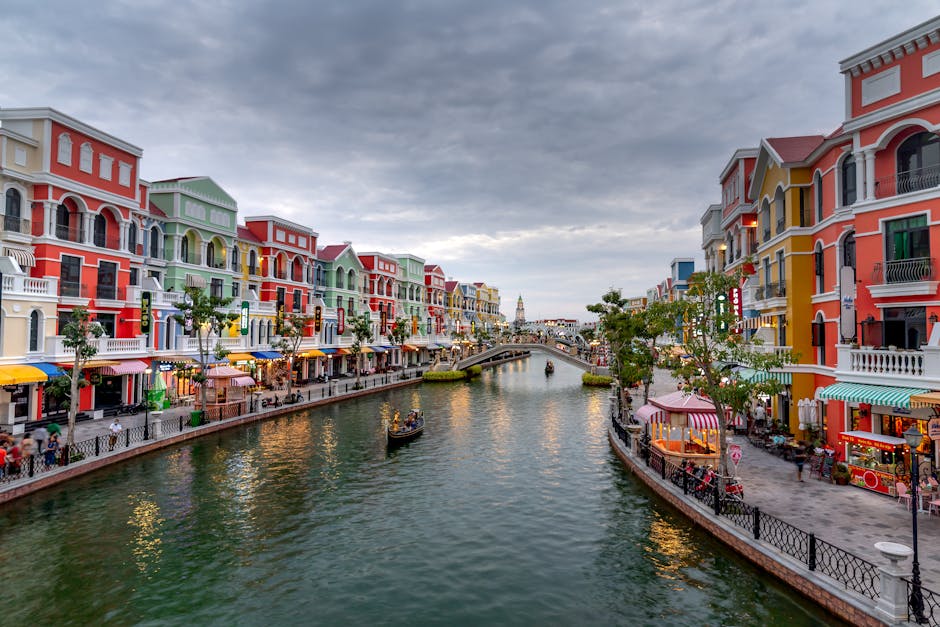
The Venetian Macao. The base room is a 74-square-meter suite — not a marketing claim, an actual measurement. The property’s scale is part of what makes Macau distinctive: the indoor canal replica, the gondoliers, the sheer density of dining and entertainment packed into a single structure. Weeknight rates dip to $150–$180. Even travelers with no interest in gambling find the spectacle worth one stay. It is also the most logistically convenient property on the Cotai Strip, with the densest shuttle network and the most dining options within the complex itself.
Couple’s trip, not interested in the casino floor?
Mandarin Oriental Macau is the only major luxury property on the Peninsula without a casino. That means no walk through the gaming floor to reach the spa. No slot machine ambient noise in the lobby. No navigating weekend crowds at midnight when you want a drink. The spa’s couples’ treatment suite is excellent — book that specifically, not just any session. The hotel’s position near the inner harbor puts you within walking distance of Restaurante Litoral for African chicken and Fong Kei Bakery for the egg tarts that most Cotai visitors never find. That food is the reason to visit Macau if you’re not gambling.
Best value on the Cotai Strip for a traveler who wants amenities?
Galaxy Macau on a weeknight. The Grand Resort Deck — 150,000 square feet of outdoor pool facilities including a wave pool, lazy river, and sand beach — is the most impressive resort amenity complex in Cotai relative to the room rate. Weeknight prices regularly fall below $180/night. Galaxy is not the most polished property on the Strip in terms of interior design. But when you’re comparing against the Four Seasons Macao at $350+/night and measuring what you actually do with your day, the gap narrows substantially.
Traveling with children?
The Venetian Macao or Galaxy Macau — the split depends on whether you want indoor space (Venetian) or outdoor water facilities (Galaxy). Both have food courts that handle varied preferences, both have family-oriented entertainment that doesn’t require setting foot on a casino floor, and both are large enough that you can fill two full days without leaving the property. The Venetian’s indoor canal and gondola rides buy about 45 minutes of genuine entertainment for most children, which is a useful number when you’re budgeting low-effort afternoon activities.
Fine dining as the primary reason for the trip?
Grand Lisboa Palace is the pick. The Robuchon at the Dom is the flagship dining experience in the complex, and the surrounding restaurant lineup across the property is the most consistent in Cotai. Rates start around $250/night on weeknights. For travelers whose Macau trip is organized around restaurant reservations rather than gaming sessions, having those restaurants downstairs rather than 20 minutes away matters more than any other amenity comparison.
| Travel Style | Best Pick | Weeknight Rate (USD) |
|---|---|---|
| First visit, full resort experience | The Venetian Macao | $150–$300 |
| Couple, no gambling focus | Mandarin Oriental Macau | $280–$420 |
| Architecture and design travel | Morpheus at City of Dreams | $350–$600 |
| Fine dining priority | Grand Lisboa Palace | $250–$450 |
| Best Cotai value, amenities focus | Galaxy Macau | $150–$280 |
| Gambling plus city walkability | Wynn Macau | $220–$380 |