
Is pho actually that good, or is it just the one Vietnamese dish Westerners know how to pronounce? After 30 days of eating my way from Hanoi to Ho Chi Minh City, the answer is more complicated than the food blogs suggest. Pho is excellent. It is also not the best thing you will eat in Vietnam.
This is not legal advice, but it is a culinary ruling based on evidence gathered across 14 cities, 60+ street stalls, and at least four bowls of pho per week. Here is what I found, what I would tell a first-timer to order, and where the pho obsession actually comes from.
What the Searcher Actually Wants: The Real Question Behind the Pho Question
Most people searching “was the pho really that good” are not asking about broth clarity or noodle width. They are asking something closer to: Is Vietnamese food actually as good as everyone says, or is it overhyped by travel influencers? The underlying worry is that they will fly 15 hours, spend two weeks eating mediocre bowls, and come home pretending it was life-changing.
Here is the honest answer. Vietnamese food is genuinely excellent, but not uniformly. The country has regional food identities that differ as much as New Orleans cooking differs from Seattle seafood. Northern food (Hanoi) is subtle, restrained, and broth-focused. Central food (Hue, Hoi An) is spicy, complex, and proud. Southern food (Saigon) is sweeter, bolder, and influenced by Chinese and Cambodian traditions.
A traveler who only eats pho in the tourist district of Hanoi’s Old Quarter is getting maybe 40% of what Vietnamese cuisine offers. That is not a criticism of pho. It is a criticism of how most itineraries treat food as a sideshow rather than the main event.
The Three Questions Every Vietnam Food Review Must Answer
- Is pho worth the hype? Yes, but only when eaten at the right stalls. Tourist-trap pho in District 1 of Saigon is a different dish from a 6 a.m. bowl in a Hanoi alley.
- What should I eat instead of pho? Bun cha, cao lau, mi quang, banh xeo, and at least a dozen other dishes that rarely make Western food lists.
- How do I avoid bad food in Vietnam? Follow the density rule: if a stall has no locals eating at it, do not eat there. This rule alone will save you from 80% of bad meals.
Pho Breakdown: The Broth, The Noodles, The Price
Let me be specific about what pho actually is, because most articles describe it as “a fragrant beef noodle soup” and then move on. Pho is a dish with three components that can each go wrong independently.
| Component | What Good Pho Has | What Bad Pho Has | Price Range (2026) |
|---|---|---|---|
| Broth | Clear, beefy, star anise and cinnamon present but not dominant, no MSG aftertaste | Cloudy, overly sweet, tastes like bouillon cubes | Included in bowl price |
| Noodles (banh pho) | Fresh, soft, slightly slippery, cut to medium width | Mushy, clumped together, or too thin and dissolving | Included in bowl price |
| Beef (if pho bo) | Thinly sliced rare beef that cooks in the hot broth, plus optional brisket or tendon | Gray, overcooked, or suspiciously uniform slices that look pre-packaged | Included in bowl price |
| Full bowl | All of the above plus fresh herbs, lime, chili on the side | Pre-garnished bowl with wilted herbs | 40,000–80,000 VND ($1.60–$3.20) |
A good bowl of pho in Hanoi costs between 40,000 and 60,000 VND. In Saigon, expect 50,000 to 80,000 VND. If you are paying more than 100,000 VND ($4) for pho, you are either in a hotel restaurant or a place designed for tourists. That does not automatically make it bad, but it does mean you are paying for air conditioning and English menus, not better broth.
The best pho I ate in 30 days was at a nameless stall on Hang Giay Street in Hanoi, at 6:40 a.m., sitting on a plastic stool that had seen better decades. The bowl cost 45,000 VND. The broth had been simmering since the previous night. The beef was sliced to order. That bowl was exceptional. The worst pho I ate was in a well-reviewed restaurant near Ben Thanh Market in Saigon. It cost 120,000 VND and tasted like dishwater with star anise. The difference was not the recipe. The difference was who the kitchen was cooking for.
Four Dishes That Beat Pho (And One That Does Not)
If I had to rank the best things I ate in Vietnam, pho would make the top ten but not the top five. Here is what beat it.
Bun Cha — The Dish Obama Made Famous, For Good Reason
Bun cha is a Hanoi specialty: grilled pork patties and pork belly slices served in a warm, slightly sweet fish-sauce broth, alongside cold rice noodles and a mountain of herbs. You dip the noodles into the broth, add herbs, and eat. The restaurant Bun Cha Huong Lien in Hanoi — where Anthony Bourdain ate with Barack Obama in 2016 — still serves the “Obama combo” for about 90,000 VND. It is touristy now, but the bun cha is legitimately good. Better bun cha exists at smaller places like Bun Cha Dac Kim on Hang Manh Street, where a full set costs around 70,000 VND.
Cao Lau — The Dish You Can Only Get in Hoi An
Cao lau is the most underrated dish in Vietnam. Thick, chewy noodles made with water from a specific well in Hoi An, topped with sliced roast pork, crispy pork cracklings, fresh herbs, and a small amount of rich broth. The noodles have a texture unlike anything else in Vietnamese food — almost like Japanese udon but firmer. You cannot get real cao lau outside Hoi An because the noodles require water from the Ba Le well. That is not marketing hype. That is a documented limitation of the recipe. A bowl costs 35,000–50,000 VND in Hoi An’s central market.
Mi Quang — Central Vietnam’s Answer to Pho
Mi quang is what happens when pho and a dry noodle salad have a baby. Turmeric-yellow rice noodles, a small amount of concentrated broth, shrimp, pork, quail eggs, peanuts, and rice crackers. It is served warm but not soupy. The broth is more like a sauce. In Da Nang and Quang Nam province, this is the breakfast of choice. A bowl costs 30,000–45,000 VND. It is more interesting than pho, more texturally complex, and almost unknown outside Vietnam.
Banh Mi — The Sandwich That Deserves Its Own Article
Banh mi is not better than pho. It is different. But it is the dish most travelers will eat most often because it is cheap, fast, and portable. A proper banh mi at Banh Mi Phuong in Hoi An costs 25,000–40,000 VND and contains pate, cold cuts, pickled vegetables, cilantro, chili, and a sauce that varies by region. The bread is the key. Vietnamese baguettes are lighter than French ones, with a thin crackly crust and airy interior. You cannot replicate this at home without Vietnamese flour and a very hot oven.
The one dish that did not beat pho: com tam (broken rice with grilled pork). It is good, but it is essentially a rice plate. If you have limited meals in Vietnam, spend them on dishes that do not exist anywhere else.
The Failure Modes: What Tourists Get Wrong About Vietnamese Food
Here is where most first-time visitors go wrong, and how to avoid it.
Mistake 1: Eating only in the tourist district. In Hanoi, the Old Quarter has some excellent food, but it also has dozens of restaurants serving watered-down versions of classics at 2–3x the local price. Walk 10 minutes in any direction and the food improves while the price drops.
Mistake 2: Ordering pho for dinner. Pho is traditionally a breakfast and late-night food. Many of the best pho stalls close by 10 a.m. If you eat pho at 7 p.m. at a restaurant that serves it all day, you are eating a tourist version. Eat pho for breakfast. Eat bun cha for lunch. Eat something regional for dinner.
Mistake 3: Avoiding street food. The street stalls in Vietnam are not a food-safety gamble if you follow one rule: eat where locals are eating. High turnover means fresh ingredients. If a stall is empty at noon, there is a reason.
Mistake 4: Assuming all Vietnamese food is light and healthy. Some of it is. Banh xeo (crispy turmeric crepe with pork and shrimp) is fried. Banh khot (mini savory pancakes) are fried. A lot of central Vietnamese food is deeply rich. Do not plan your meals expecting spa food.
When Pho Is NOT Worth It
Here is the counterintuitive ruling: pho is not worth eating in certain situations, and you should skip it without guilt.
If you are in Hoi An, eat cao lau and mi quang. If you are in Hue, eat bun bo Hue (spicy beef noodle soup) — it is pho’s bolder, more interesting sibling. If you are in Da Nang, eat mi quang and seafood. If you are in Saigon, eat hu tieu (clear pork and seafood noodle soup) or com tam. Pho is a northern dish that has spread everywhere, but it is not the best dish in most of the country.
That said, if you are in Hanoi, pho is absolutely worth it. Pho Thin on Lo Duc Street is famous for stir-frying the beef in garlic before adding it to the broth — a Hanoi institution since 1979. Pho Gia Truyen on Bat Dan Street is the classic purist version, open only in the morning, often sold out by 9 a.m. Both cost under 60,000 VND per bowl.
The Verdict: What I Would Tell a First-Timer
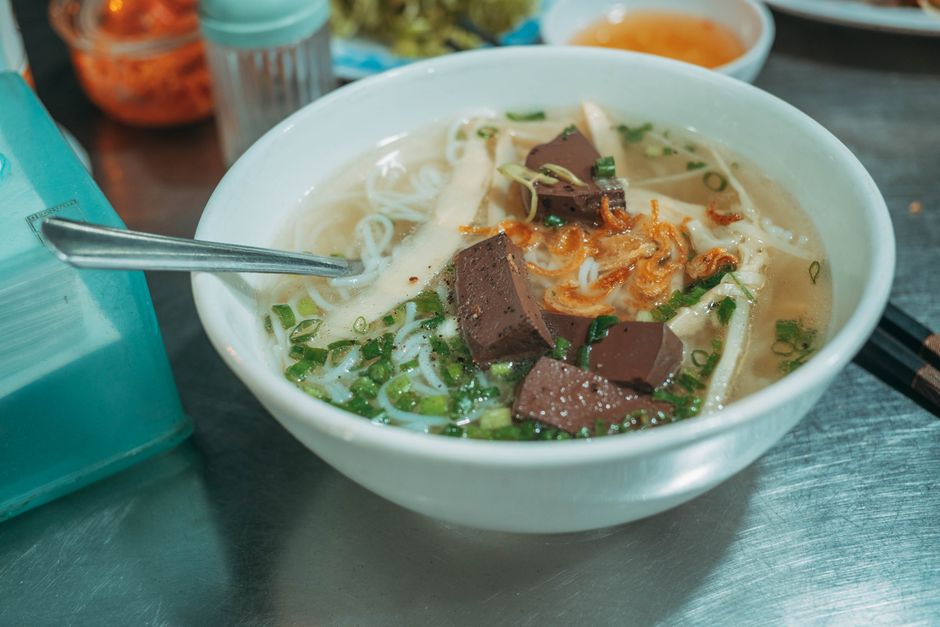
Pho is really that good — when you eat it in Hanoi, at breakfast, at a stall with a line of locals. It is not a life-altering religious experience. It is a very good bowl of soup with a broth that takes 12+ hours to make properly. The hype is real but misplaced. Pho is not the best thing about Vietnamese food. It is the most famous thing about Vietnamese food.
If you have one week in Vietnam, eat pho once or twice. Spend the rest of your meals on bun cha, cao lau, mi quang, banh xeo, and whatever the person next to you is eating. That is the actual culinary journey. Pho is just the entry point.
The future of Vietnamese food tourism is moving toward regional specificity. Travelers who understand that Hanoi, Hue, and Saigon are three different food countries will have a fundamentally better experience than those chasing the same bowl of pho from north to south. The pho will still be there. The cao lau might not be, if the well in Hoi An ever runs dry.