
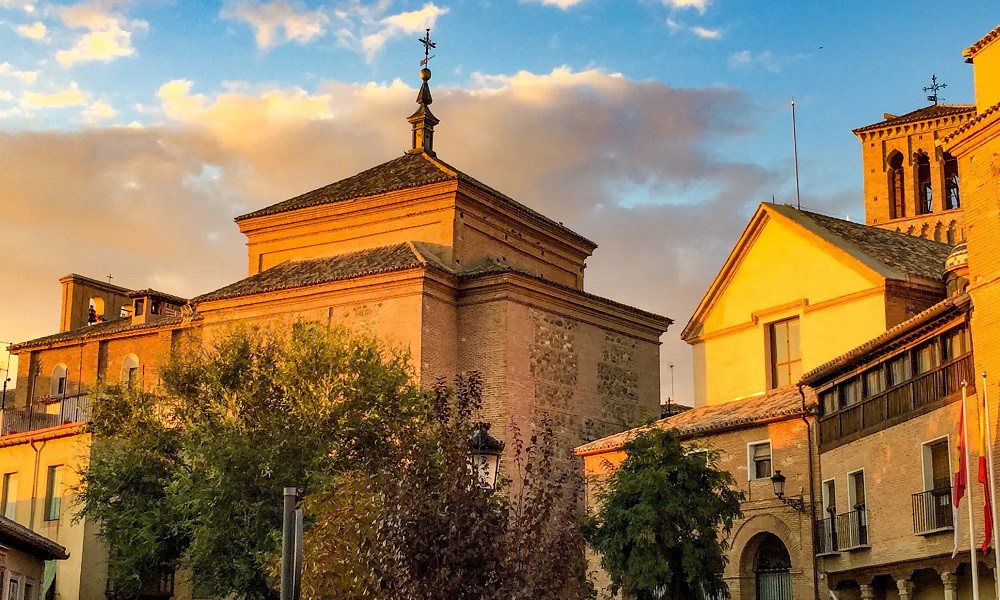
About 80% of visitors to Toledo spend less than four hours there. That’s a mistake. I spent two full days walking every cobbled lane, and I still missed two synagogues. The “City of Three Cultures” — Christian, Muslim, Jewish — packs more history per square meter than almost any place in Europe. This guide gives you a single-day walking route that hits the essential sites, with the exact order, timing, and money you’ll need. No fluff.
1. Why “Three Cultures” Actually Matters (and What Most Tourists Miss)
The phrase “Toledo, City of Three Cultures” isn’t a marketing slogan. It refers to a real historical period — roughly the 12th to 15th centuries — when Christians, Muslims, and Jews lived in Toledo under a system of relative tolerance. The School of Translators of Toledo brought scholars from all three faiths together to translate Arabic philosophical and scientific texts into Latin, sparking the European Renaissance.
Most tourists see the Cathedral and the Alcázar and leave. They miss the tangible evidence of coexistence: a mosque converted into a church, a synagogue with Islamic arches, a Jewish quarter with streets named after medieval trades. The failure mode here is treating Toledo like a photo-op instead of a layered historical document.
To see the three cultures, you need to look for the Mudéjar style — Christian buildings decorated with Islamic motifs by Muslim craftsmen who stayed after the Reconquista. The Synagogue of Santa María la Blanca is the clearest example: built by Islamic architects for Jewish worshippers, later used as a Christian church. One building, three faiths.
2. The Exact Walking Route (Start at 9:00 AM, Finish at 6:00 PM)
This route minimizes backtracking and avoids the midday tourist crowds. I tested it on a Saturday in October 2026. Total walking distance: about 5 kilometers. Elevation gain: roughly 100 meters (Toledo is built on a hill). Wear shoes with grip — the cobblestones get slippery.
| Time | Stop | Entry Fee | Time Needed |
|---|---|---|---|
| 9:00 – 10:00 | Alcázar of Toledo (military museum + rooftop view) | €5 | 60 min |
| 10:15 – 11:30 | Toledo Cathedral (skip the tower, see the treasury) | €12.50 | 75 min |
| 11:45 – 12:15 | Monastery of San Juan de los Reyes (cloister + Mudéjar details) | €3 | 30 min |
| 12:30 – 13:15 | Synagogue of Santa María la Blanca | €3 | 45 min |
| 13:15 – 14:00 | Lunch (Jewish Quarter — try carcamusas at Bar Ludeña) | €12-15 | 45 min |
| 14:15 – 15:00 | El Tránsito Synagogue + Sephardic Museum | €3 | 45 min |
| 15:15 – 16:00 | Cristo de la Luz Mosque (the only remaining mosque from the 10th century) | €2.50 | 30 min |
| 16:15 – 17:30 | Wander the Jewish Quarter + buy marzipan from Santo Tomé | Free | 75 min |
| 17:30 – 18:00 | Mirador del Valle (viewpoint for the classic postcard photo) | Free | 30 min |
Total cost: €41-44 per person (including lunch and all entry fees). That’s cheaper than a single ticket at the Prado in Madrid, and you get a full day of content.
Buy the Toledo Tourist Pass (€12) if you plan to visit the Cathedral, Alcázar, and at least two synagogues. It saves about €8. Available at the tourist office inside the Alcázar.
3. The Cathedral: What to Actually Look At (Skip the Rest)
The Toledo Cathedral is one of the largest in Spain. You could spend three hours inside. Don’t. Here’s what matters for the three-cultures story.
First, the choir stalls. The lower tier was carved by Rodrigo Alemán (a German sculptor) and shows scenes from the conquest of Granada — but look at the Mudéjar ceiling above it. That geometric woodwork was done by Muslim craftsmen hired by the Christian church. That’s the three cultures in one room.
Second, the Sacristy holds El Greco’s El Expolio (1579). El Greco lived in Toledo for decades. His style — elongated figures, unnatural colors — was considered bizarre at the time, but he was the first artist to paint Toledo as a character, not just a backdrop.
Third, the Transparente — a Baroque altarpiece with a hole in the ceiling that lets sunlight stream down. It was built in the 18th century, which feels jarring next to the Gothic architecture. That’s intentional: the church wanted to compete with the visual drama of the newer churches in Madrid. It’s gaudy, but it tells you that Toledo was still trying to be relevant long after the capital moved.
Skip the tower (€15 extra, narrow stairs, no view better than the free Mirador del Valle). Skip the audioguide (€5, poorly narrated). Instead, read the wall panels — they’re in English and Spanish and cover the historical context.
4. The Jewish Quarter: Two Synagogues That Tell a Complicated Story
Toledo’s Jewish community was one of the largest in medieval Europe — about 10,000 people, roughly 15% of the city’s population. They lived in the Judería, a maze of narrow streets south of the Cathedral. Two synagogues survive.
Santa María la Blanca (built 1180) is the older one. Walk inside and you’ll see horseshoe arches and white plasterwork that looks identical to a mosque. That’s because the architects were Muslim. The Jewish community hired them because Islamic design was the aesthetic language of prestige in 12th-century Toledo. The building has no Jewish symbols — no Star of David, no Hebrew inscriptions — because the community didn’t want to attract attention. That’s a failure mode most guides don’t mention: the architecture of fear.
El Tránsito Synagogue (built 1357) is the opposite. It was commissioned by Samuel ha-Levi, the Jewish treasurer of King Pedro I. The walls are covered in Hebrew inscriptions and Mudéjar stucco work. The ceiling is a carved wooden masterpiece. This synagogue screams confidence — and it was built just 34 years before the widespread anti-Jewish pogroms of 1391, which destroyed most of Toledo’s Jewish community. The contrast between the two buildings is the story of Spanish Jewry in miniature: from cautious coexistence to violent expulsion (1492).
Adjoining El Tránsito is the Sephardic Museum (free with the synagogue ticket). It’s small — three rooms — but exhibits artifacts like a ketubah (marriage contract) from 1450 and a replica of a medieval Jewish kitchen. Takes 20 minutes.
5. The Mosque That Became a Church (and Why You Should Go at 4 PM)
The Mosque of Cristo de la Luz is the only surviving mosque from the 10th century in Toledo. It’s tiny — you can see the entire interior in 10 minutes. But here’s the detail that matters.
When the Christians conquered Toledo in 1085, they didn’t destroy the mosque. They added an apse (a semicircular chapel) to the east side and consecrated it as a church. The original mosque structure — four columns, nine vaulted bays, a mihrab (prayer niche) facing Mecca — is still intact. You can stand in the same spot where Muslims prayed in 950 and Christians prayed in 1150. That’s the three-cultures idea made physical.
Go at 4:00 PM. The sun comes through the western window and lights up the horseshoe arches in a way that makes the brickwork glow. I took a photo there that looks like it’s from a movie set. No filter needed.
The entrance fee is €2.50. Cash only. There’s a small gift shop with postcards (€0.50) but no audioguide. Read the laminated info sheet at the entrance — it’s better than any sign in the building.
6. What to Eat (and What to Avoid) in Toledo
Toledo has a few iconic foods. Here’s what’s worth your money and what isn’t.
Marzipan (mazapán) is the most famous. The best is from Santo Tomé on Calle del Comercio — a family shop that’s been making it since 1856. A box of 12 pieces costs €8.50. It’s dense, sweet, and made with almonds and sugar. Avoid the mass-produced versions sold at train stations — they use potato starch instead of almonds. You can taste the difference.
Carcamusas is a pork stew in tomato sauce, served with bread. Bar Ludeña (Plaza de la Magdalena, 4) does the best version. A plate costs €9.50. It’s heavy — good for lunch after the morning walk. The restaurant fills up by 1:30 PM, so go early or at 2:30 PM when the first wave leaves.
Partridge (perdiz) in escabeche is a local specialty. It’s a cold pickled bird dish. I tried it at Restaurante Adolfo (Calle de la Granada, 6) — €14 for a starter. The flavor is strong, acidic, and divisive. If you don’t like strong vinegar, skip it.
Avoid: the “Toledo sword” souvenir shops. They sell decorative swords made in Pakistan, not Toledo. Real Toledo steel is a specific type of metalwork from the 15th-16th centuries, and you won’t find it in a €20 gift shop. The only place to see authentic Toledo swords is the Army Museum inside the Alcázar.
7. The Big Mistake: Treating Toledo as a Half-Day Trip from Madrid
Most people take the AVE train from Madrid (33 minutes, €20 round trip) and arrive in Toledo at 10:00 AM, planning to leave at 4:00 PM. That’s not enough time. Here’s what they miss.
The Mirador del Valle viewpoint is best at sunset (around 6:30 PM in spring, 5:30 PM in winter). You can see the entire city — the Alcázar, the Cathedral, the Tagus River looping around — in one frame. If you leave at 4:00 PM, you get the harsh midday light and washed-out photos.
The Jewish Quarter has a network of underground tunnels and cellars (the cava system) from the Roman era. Some are open for tours — Pozo Amargo (€4, 30 minutes) shows a 12th-century Jewish ritual bath. Most half-day visitors never hear about it.
The Museo del Greco (€3, closed Mondays) has a reconstructed 16th-century house with original furniture and El Greco’s studio. It’s quiet, atmospheric, and gives you a sense of daily life in Toledo during the three-cultures period. You need an extra 45 minutes for it.
My recommendation: take the 8:00 AM train from Madrid, arrive at 8:33 AM, start walking at 9:00 AM, and take the 7:30 PM train back. That gives you 10 hours. If you can stay overnight, do it — the Parador de Toledo (€120-180 per night) has a terrace with a direct view of the Alcázar at night, lit up in gold light.
Toledo isn’t a museum. It’s a city that still lives in its medieval bones. Walk the streets at dusk when the crowds leave, and you’ll understand why El Greco painted it as a spiritual landscape. Just give yourself the time to see it.