
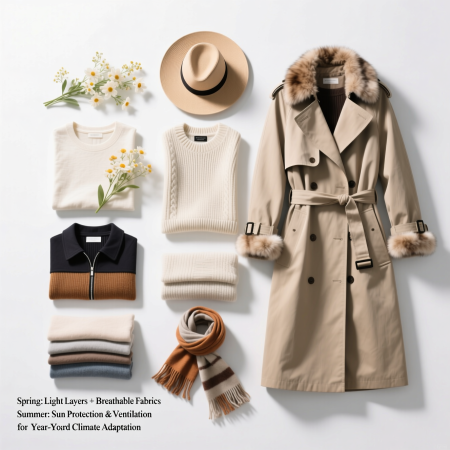
The Foundations of Every Great Transitional Outfit
You’ll never have to do the morning coat dance again if you master the 3-piece rule: start with a base layer (think breathable and close to skin), add a mid-layer for warmth, and finish with an adjustable outer layer that you can easily remove or add as temperatures fluctuate. This combo is your foolproof formula for unpredictable weather.
When it comes to fabrics, choose smart, versatile options like merino wool, Tencel, light cotton, and thin cashmere. These materials breathe, regulate heat, and feel soft all day—perfect for those temperature swings where it’s too hot for a heavy coat but too chilly for just a shirt.
Keep your palette neutral—think blacks, navy, beige, and soft greys—so each piece mixes and matches effortlessly without the stress of hunting for a matching sock. This saves time and mental energy on busy mornings.
Finally, build your wardrobe around key transitional heroes: the classic trench coat, sharp blazer, cozy cardigan, timeless denim jacket, and a versatile scarf or shawl. Each works overtime across seasons and styles—serving you fresh looks rather than a wardrobe full of “just-in-case” items. Because, honestly, Mother Nature clearly never learned to commit, but with these staples, you will.
The 12 Foolproof Season-Transition Outfit Formulas
Navigating those in-between days becomes effortless with these tested outfit formulas that balance style and comfort perfectly.
-
The Classic Trench Formula (10–20 °C): Pair a crisp white shirt with a slim knit underneath, top it with a timeless trench coat, and finish with loafers. This outfit nails smart layering for mild weather.
-
The Oversized Blazer Trick: Combine a simple tee with a midi skirt and layer an oversized blazer on top. Sneakers or boots wrap it up nicely, perfect for casual-to-polished transitions.
-
The Cardigan-as-Top Layer (8–18 °C): Wear a slip dress with a long cardigan and ankle boots. This look keeps you warm without sacrificing flowy comfort for cool mornings and warmer afternoons.
-
The Denim Jacket Uniform: A striped tee, black jeans, and a denim jacket create a reliable base. Add a scarf for an easy pop of warmth and texture.
-
Lightweight Knit + Leather Jacket Combo: Pair a silk blouse with straight jeans and a leather jacket. This mix of soft and edgy works especially well for unpredictable temps.
-
The Shirt-Dress Hybrid: Use a shirt dress open like a coat over a tank and jeans, pinned at the waist with a belt for shape. It’s versatile and effortlessly chic.
-
Merino Base Layer Magic: A merino long-sleeve top under a midi slip dress, finished with a wool coat and boots, offers warmth and elegance, ideal for colder transitional days.
-
The Sweater Vest Revival: Layer a button-down shirt beneath a cozy sweater vest paired with wide-leg trousers. It’s a sharp, retro-inspired look that adapts well to seasonal shifts.
-
The Long Shirt + Short Jacket Layer: A long oxford shirt matched with a cropped jacket and leggings or jeans balances proportions and keeps layering light.
-
The Scarf-as-Shawl Method: Drape an oversized wool scarf over a tank and high-waist trousers for a simple yet stylish way to add warmth without bulk.
-
The Transitional Monochrome Look: Choose a matching knit set and contrast it with a trench or coat for a sleek, pulled-together vibe.
-
The “Remove One Layer” Evening Formula: Start with a satin camisole, blazer, and jeans for daytime. When night falls, remove the blazer for a relaxed, laid-back look.
These formulas provide smart layering techniques for unpredictable weather, helping you dress efficiently for those fall-to-winter or spring transitional outings. To see how the classic trench works wonderfully in an urban setting, check out inspiring outfit ideas from Brick Lane, London.
How to Adapt These Formulas to Your Climate & Lifestyle
No matter where you live or how you spend your days, adjusting season-transition outfit formulas is key to staying comfortable and stylish.
For Colder Regions:
- Add thermal layers like Heattech or fine merino wool base layers for extra warmth without bulk.
- Swap lightweight coats for longer, insulated options like wool or padded coats that still work with your layering system.
- Incorporate hats, gloves, and scarves as functional accessories that also elevate your look.
For Warmer Regions:
- Choose breathable, moisture-wicking fabrics such as Tencel, thin cotton, or lightweight knits instead of heavier wools or cashmere.
- Opt for cropped jackets, cardigans, or unlined blazers instead of bulky outerwear.
- Keep your layers minimal and easily removable to adapt to sudden temperature changes during the day.
Office vs Weekend Tweaks:
- For office settings, prioritize polished pieces like blazers, tailored trousers, and classic trench coats that fit dress codes but still allow layering.
- Swap sneakers for loafers or ankle boots to maintain professionalism.
- On weekends, relax your look with denim jackets, oversized cardigans, or sweater vests paired with casual footwear.
Adjusting these outfit formulas to your climate and lifestyle ensures you get the most from your transitional wardrobe, maintaining comfort and style through every weather shift. For layered city exploration ideas, check out vibrant destinations like Sainte-Chapelle, where adaptable layering can be a game changer during unpredictable spring or fall days.
The 10 Transitional Wardrobe Heroes You Need (Shopping List)
Building a versatile wardrobe for season changes means investing in key pieces that work beyond one season. Here are the must-haves that handle temperature swings effortlessly, with style and sustainability in mind:
-
Classic Trench Coat
The timeless trench is your go-to outer layer for unpredictable weather. Look for water-resistant fabrics and neutral tones. Brands like COS offer sustainable options around $250–$350.
-
Merino Wool Base Layer
A lightweight, breathable merino long-sleeve top works great under layers. Quince provides excellent merino basics with prices usually between $50–$80, made with ethical sourcing in mind.
-
Oversized Blazer
Perfect for office or casual, an oversized blazer layered over tees or shirts is a transitional must. Check out Everlane’s durable blazers, starting at $150, with a focus on transparency and sustainability.
-
Lightweight Knit Sweater or Cardigan
Thin cashmere or Tencel blends offer warmth without bulk. Arket has beautiful knitwear in the $100–$200 range, balancing quality and environmental impact.
-
Denim Jacket
A classic denim jacket works for spring and fall. Choose organic or recycled cotton denim for a greener choice—several brands under $150 offer good options.
-
Silk or Tencel Blouse
Smooth, breathable fabrics like silk or Tencel elevate layering without overheating. Sustainable lines with fair-trade certifications can be found for $80–$130.
-
Wide-Leg Trousers
Mid-weight trousers in neutral tones give you comfort and style through changing seasons. Look for stretchy but sturdy fabrics for ease of movement.
-
Slip Dress
A versatile slip dress can be worn alone or layered with sweaters and jackets. Sustainable brands often price these between $70 and $120.
-
Scarf or Oversized Shawl
Scarves in wool or alpaca adds warmth and style. Opt for eco-friendly options with natural dyes from brands like Quince.
-
Leather or Faux Leather Jacket
A lightweight leather jacket finishes many transitional looks. Choose vegetable-tanned or high-quality faux leather to stay sustainable.
Each item on this list works as part of easy layering outfits that keep you comfortable through temperature swings. Plus, investing in quality, sustainable pieces means you get longer-lasting style that helps reduce waste. For putting these essentials into action with outfit inspiration, you can check out well-curated seasonal looks and layering tips that suit your lifestyle and climate.
Finding the right balance and brands that align with your values is key. Combining these wardrobe heroes with smart layering techniques is your best bet for an effortless, minimalist season-transition outfit.
For planning your travel wardrobe or trips across climates, such as a visit to Barcelona, keep these versatile pieces in mind to stay stylish and prepared.
Common Layering Mistakes to Avoid
When adapting your outfits for temperature swings, layering is key—but there are some common pitfalls to watch out for:
- Bulky under bulky: Avoid stacking heavy layers like thick sweaters under equally bulky coats. This adds unnecessary weight and looks clumsy. Instead, balance a chunky outer layer with slimmer bases.
- Wrong proportions: Pairing oversized pieces on top of loose bottoms can overwhelm your frame. Keep one layer more fitted to maintain a flattering silhouette.
- Too many colors: Sticking to a neutral color palette ensures your layers mix effortlessly. Too many clashing hues create a chaotic look and make transitions harder.
- Ignoring fabric weights: Mixing heavy fabrics like wool with light ones like thin cotton without thought can cause discomfort—not all fabrics layer well together.
- Skipping adjustable layers: Having at least one versatile outer layer like a trench or denim jacket makes it easier to adapt during sudden weather changes.
Mastering these basics leads to effortlessly stylish, functional transitional outfits every time. For inspiration on streamlined layering, exploring minimalist season change outfits can really sharpen your look.