
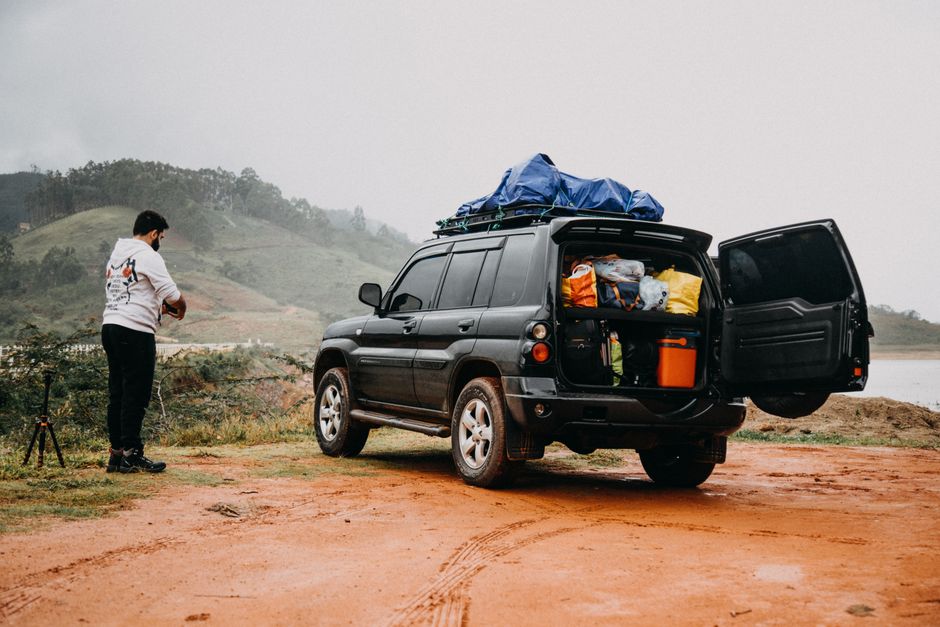
I watched a hiker in Costa Rica pour water out of her Merrell Moab 3s at a trailhead in Monteverde. She’d bought them three weeks earlier, specifically for that trip. The boots were marketed as waterproof. The cloud forest didn’t care.
Here’s the uncomfortable truth: most “waterproof” hiking boots are designed for occasional puddle splashes and light rain. They are not designed for actual wet climates — places where it rains for six hours straight, where trails become streams, where humidity alone soaks through stitching within days. If you’re planning to hike in the Pacific Northwest, Southeast Asia, the UK, Patagonia, or any tropical highland, you need to understand what actually keeps water out and what fails catastrophically.
This article compares the two most commonly recommended waterproof boots — Merrell and Salomon — but more importantly, it explains the waterproofing technology that determines whether your feet stay dry or prune up like you’ve been in a bath for six hours.
The Real Problem: Why “Waterproof” Boots Soak Through in Wet Climates
Waterproof hiking boots rely on a membrane — usually Gore-Tex or a proprietary equivalent — sandwiched between the outer fabric and the inner lining. The membrane has microscopic pores small enough to block liquid water but large enough to let water vapor (sweat) escape. In theory, this works. In practice, there are three failure points that nobody tells you about in the product description.
Failure Point 1: The Outer Fabric Wets Out
When the outer fabric of a boot gets saturated with water, the membrane can no longer breathe. Sweat builds up inside. Your feet get wet from the inside, and you blame the boot for leaking. It didn’t leak. It suffocated. This is called “wetting out,” and it’s the most common complaint in reviews for both Merrell and Salomon boots. The fix is a DWR (durable water repellent) coating, but DWR wears off after 20-30 days of real trail use. Most people never reapply it because they don’t know they need to.
Failure Point 2: The Ankle Collar Is Not Waterproof
No hiking boot is waterproof above the ankle collar. If you step in water deeper than the boot’s collar — or water splashes over the top — it goes straight down into the boot. In wet climates, trails often have water crossings that are ankle-deep or deeper. A “waterproof” boot becomes a bucket. This is why trail runners with drainage holes sometimes outperform waterproof boots in truly wet conditions: at least they drain.
Failure Point 3: Seams and Stitching Degrade
Boots are stitched together. Every stitch is a potential water entry point. Quality manufacturers tape or seal the seams, but that sealing breaks down with flexing, abrasion, and time. A boot that was waterproof in month one may leak at the toe crease by month six. This is not a defect. It’s material fatigue.
For wet climate travel specifically — where you’re hiking day after day in saturated conditions — you need a boot designed for continuous water exposure, not occasional rain. That changes the math on which boots actually work.
Merrell Moab 3 GTX vs. Salomon X Ultra 4 GTX: What Actually Happens on Wet Trails
Both boots are bestsellers. Both use Gore-Tex membranes. Both cost between $150 and $190. But they perform very differently in sustained wet conditions, and the differences show up in specific, predictable ways.
| Factor | Merrell Moab 3 GTX ($150) | Salomon X Ultra 4 GTX ($175) |
|---|---|---|
| Weight (per boot, size 9) | 1 lb 2 oz | 14.5 oz |
| Membrane | Gore-Tex | Gore-Tex |
| Outer material | Leather + mesh | Synthetic textile |
| Drying time after full soak | 18-24 hours | 12-16 hours |
| Grip on wet rock | Good (Vibram TC5+) | Excellent (Contagrip MA) |
| Ankle support | Moderate | High for a low-cut design |
| Best for | Wide feet, dry-to-damp trails | Narrow feet, technical wet terrain |
| Waterproofing failure point | Toe crease stitching | Mesh panels near midfoot |
The Merrell Moab 3 GTX is the most popular hiking boot in America. It’s comfortable out of the box, fits wide feet well, and handles moderate trails competently. But the leather-and-mesh upper absorbs water aggressively in sustained rain. Once the leather saturates, the boot becomes heavy, cold, and slow to dry. In Costa Rica’s cloud forests or Vietnam’s monsoon season, you’ll be hiking in soaked boots by day two.
The Salomon X Ultra 4 GTX uses a synthetic upper that resists saturation better. It dries faster. The Contagrip outsole is genuinely superior on wet rock — and in wet climates, grip is a safety issue, not a comfort issue. The tradeoff: Salomon runs narrow. If you have wide feet, the X Ultra 4 will crush your toes by mile eight.
Verdict: For sustained wet climate hiking on technical terrain, the Salomon X Ultra 4 GTX is the better boot. For wide feet or casual trails with intermittent rain, the Merrell Moab 3 GTX is fine — but don’t expect it to keep your feet dry in a rainforest.
When Waterproof Boots Are the Wrong Choice Entirely
This is the section most gear guides skip. Sometimes the answer isn’t “which waterproof boot” — it’s “no waterproof boot.”
In hot, wet climates — think Thailand in rainy season, the Amazon basin, lowland Vietnam — waterproof boots trap heat and sweat. Your feet get wet from perspiration regardless of the membrane. A non-waterproof trail runner with aggressive drainage (like the Salomon Speedcross 6 or the Altra Lone Peak 8) will actually keep your feet drier because water flows out as fast as it flows in. You trade dry feet for wet-but-not-pruney feet, and in 85°F heat with 90% humidity, that’s the right trade.
For cold, wet climates — Patagonia, Scotland, coastal Alaska — waterproof boots earn their keep. Cold water is dangerous. Wet feet in 40°F weather leads to blisters, trench foot, and misery. Here, a fully gusseted tongue and a taller collar matter more than breathability. The Salomon Quest 4 GTX ($230) is a better choice than either the Moab or the X Ultra for these conditions because it adds height and insulation.
The mistake is buying one boot for all conditions. No single boot handles both tropical downpours and cold coastal drizzle well. If your travels span both, you need two pairs — or a non-waterproof shoe for the tropics and a waterproof boot for the cold.
How to Extend Waterproof Boot Life in Wet Climates (Specific Steps)
You can’t make a mediocre boot great, but you can make a good boot last twice as long. Here’s what actually works, based on how Gore-Tex and DWR behave in the field.
- Reapply DWR before every wet trip. Nikwax TX.Direct Spray-on ($15) takes 10 minutes. Do it the night before you fly. The boot’s outer fabric will bead water instead of absorbing it, which keeps the membrane breathing and your feet drier.
- Dry boots with newspaper, not heat. Stuff wet boots with newspaper overnight. Replace the paper after 4 hours if it’s saturated. Never put boots near a fire, heater, or direct sun — heat delaminates the membrane from the outer fabric and destroys waterproofing permanently.
- Wear merino socks, not cotton. Darn Tough Hiker Micro Crew ($25) or Smartwool PhD Outdoor ($24) wick moisture away from skin. Cotton holds water against your foot and causes blisters even in waterproof boots.
- Seam-seal the toe crease before it fails. Gear Aid Seam Grip ($9) applied to the toe crease stitching on day one prevents the most common leak point on Merrell boots. Do it before the boot ever sees water.
- Check the gusset. The tongue gusset is the fabric connecting the tongue to the boot sides. If it’s not fully gusseted to the top of the boot, water enters at the ankle. Both the Moab 3 and X Ultra 4 have partial gussets — water over the second lace hook means wet feet.
What to Buy for Wet Climate Travel in 2026
Here are the specific boots I’d actually pack, depending on where you’re going and what you’re doing. No affiliate links. No sponsored picks. Just what works.
Best overall for wet climate hiking: Salomon X Ultra 4 GTX ($175)
The synthetic upper resists saturation, the Contagrip outsole grips wet rock better than anything Merrell currently makes, and the boot dries overnight in humid conditions. Narrow fit is the main drawback. If you have wide feet, size up half a size or skip it.
Best for cold, wet, muddy trails: Salomon Quest 4 GTX ($230)
Taller collar, fully gusseted tongue, more insulation. This is the boot for Patagonia, Scotland, Iceland, and coastal Alaska. Heavier than the X Ultra, but when cold water is a safety issue, weight is worth it.
Best for wide feet in wet climates: Lowa Renegade GTX Mid ($255)
If Merrell fits your foot but you want better wet-weather performance, the Lowa Renegade GTX Mid has a wider last than Salomon and a more water-resistant leather upper than the Moab. It’s more expensive, but the waterproofing lasts longer in sustained rain.
Best for hot, wet, tropical conditions: Salomon Speedcross 6 (non-GTX, $145)
No membrane. Aggressive drainage. Dries in 30 minutes. For Thailand, Vietnam, the Amazon, or any hot rainy climate, this is the smarter choice than any “waterproof” boot. Your feet will get wet, but they won’t stay wet.
The single most important takeaway: waterproof boots only work if you match the boot to the climate and maintain the DWR coating — in truly wet conditions, the Salomon X Ultra 4 GTX outperforms the Merrell Moab 3 GTX, but in hot tropical rain, skip waterproofing entirely and buy a fast-draining trail runner instead.