
You’ve done the French Quarter. You’ve eaten a beignet at Café Du Monde at midnight, survived Bourbon Street, and now someone — a local, a hotel concierge, a well-upvoted Reddit thread — is telling you the Garden District is where you should actually be spending your time. They’re right.
I’ve been to New Orleans six times. The Garden District is the neighborhood I plan around first. Not the French Quarter. Not the Marigny. Here’s everything I’ve figured out about doing it well.
Why the Garden District Deserves a Full Day, Not a Drive-Through
Most tourists treat this neighborhood like a photo op — ride down Prytania Street, take a picture of a mansion through the iron fence, go back to the hotel. That’s the wrong approach and they’re leaving the best parts untouched.
The Garden District is one of the most intact antebellum residential neighborhoods in the United States. The houses here were built between the 1840s and 1880s by wealthy Anglo-American merchants who deliberately settled outside the Creole French Quarter. They brought their own architectural preferences — Greek Revival, Italianate, Queen Anne — and built on a scale that’s hard to grasp until you’re standing in front of it. These aren’t replicas or restored facades. The bones are original.
What makes this neighborhood architecturally different
The Garden District sits between St. Charles Avenue and Magazine Street, from roughly Jackson Avenue to Louisiana Avenue. Unlike the French Quarter’s dense Creole cottages stacked wall-to-wall, the homes here sit back from the sidewalk on deep lots, behind iron fences and live oak canopies. Some of those oaks are over 200 years old.
The visual effect — sunlight filtering through century-old trees, cast-iron galleries wrapping around Greek Revival porches — doesn’t photograph well. You have to walk it to understand why people come back.
The case for taking your time
Walk the core streets at tourist pace and you’ll finish in 45 minutes and wonder what the fuss is about. Slow down, read the historical markers, stop at Lafayette Cemetery No. 1, have lunch on Magazine Street — suddenly you’ve lost three hours without trying. That’s the right version of this neighborhood.
One full day is the minimum. Two is better if you want to do Magazine Street justice.
The 7 Stops Worth Putting on Your Map
Not all blocks are equal. This is the list I’d hand to a friend visiting for the first time, ranked by actual worth of your time.
- 1239 First Street — Anne Rice’s former home: Greek Revival built in 1857. Rice lived here for years and wrote parts of the Vampire Chronicles inside. It’s privately owned, so you’re viewing from the sidewalk, but the house is meticulously maintained and immediately recognizable to fans of the books and the AMC series.
- Prytania Street between Jackson and First: Walk this entire stretch. The Brevard-Clapp House, the Robinson House, the Carroll-Crawford House — these are the homes you came to see. Most carry historical markers. Don’t rush this block.
- Lafayette Cemetery No. 1: Washington Avenue at Sixth Street. Free entry. Open Monday through Saturday 7am to 2:30pm, Sunday 7am to noon. More on this below.
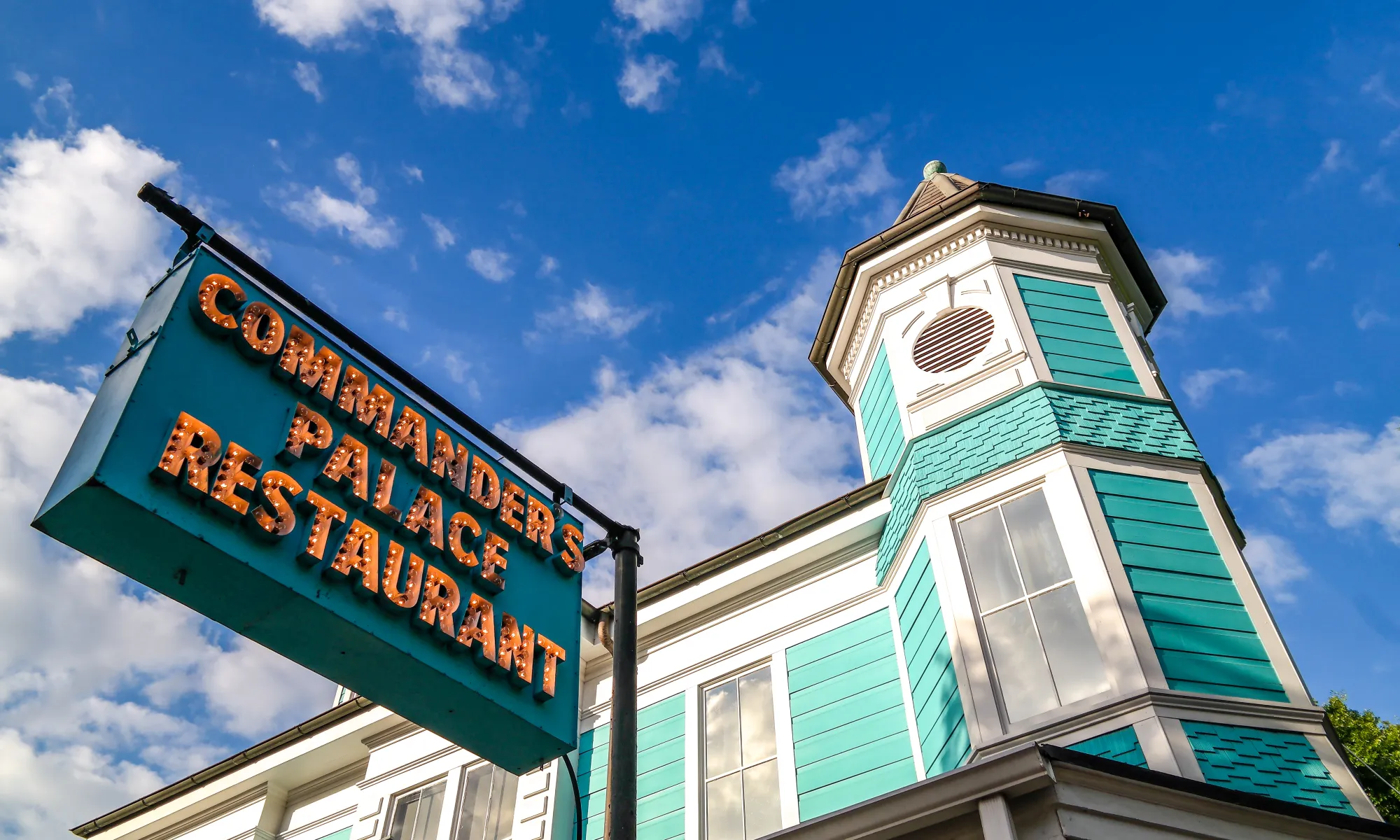
- Commander’s Palace: 1403 Washington Avenue, directly across from the cemetery. One of the best restaurants in New Orleans. Saturday jazz brunch with 25-cent martinis. Book three to four weeks ahead for weekend service.
- Coliseum Street: Quieter than Prytania, better for unhurried walking. The Payne-Strachan House at 1134 Coliseum Street is where Jefferson Davis died in 1889 — worth knowing, worth stopping at.
- Magazine Street (Sixth to Eighth Streets): The commercial strip running parallel to the Garden District. This stretch has the best concentration of antique shops, local restaurants, and coffee spots. Stein’s Market and Deli is here. Coquette is here.
- Coliseum Square Park: On the edge of the Lower Garden District. Less manicured than the rest, which is why it feels more real. Locals actually use it.
What to skip: The blocks south of Magazine Street toward the river. That’s the Irish Channel — a different neighborhood with a different character. Worth exploring separately, but don’t confuse it with the Garden District proper.
A tip that makes the walk noticeably better
Walk on the shaded side of the street. The live oak canopy on Prytania provides genuine shade, and in summer the temperature difference between shaded and unshaded pavement can be close to 10°F. Sounds obvious. Most visitors don’t do it and spend the whole morning miserable.
What the walking tours get wrong
Most tour operators depart from the French Quarter and spend maybe 30 minutes in the Garden District before moving on. That’s not enough time to understand the neighborhood. If you want a guided experience, book a dedicated Garden District tour — several operators run 90-minute to two-hour walks focused exclusively on this area. For everything else, walk it yourself. The historical markers will do the job.
Getting There: Take the Streetcar, Not a Rideshare
Take the St. Charles Avenue streetcar. $1.25 per ride. It runs the full length of St. Charles and deposits you at Washington Avenue, directly in front of Commander’s Palace and Lafayette Cemetery. The cars are green, wood-paneled, and some are over 100 years old — they’re a National Historic Landmark. The ride from Canal Street takes about 20 minutes. Getting off at Washington Avenue is your starting point. Do not Uber here. You’ll miss half the point of arriving.
Where to Eat and Drink Without Making a Mistake
Magazine Street and the streets immediately off it have some of the best neighborhood restaurants in New Orleans. These are the places I’ve actually eaten and would send someone I trust.
Commander’s Palace — book it before you book your flight
Commander’s Palace at 1403 Washington Avenue is one of the most celebrated restaurants in the American South. The Saturday jazz brunch is the thing — turtle soup, bread pudding soufflé, and 25-cent martinis during brunch service. Don’t skip the martinis because they’re 25 cents. That’s the point. Lunch runs $40–65 per person before drinks. Weekend brunch books out weeks in advance; weekday lunch is more accessible. The dress code is business casual and they do enforce it.
Coquette — the pick when you can’t plan three weeks out
Coquette at 2800 Magazine Street is where I’d send a friend who wants something excellent without the Commander’s Palace reservation commitment. The menu changes frequently. It’s chef-driven, the wine list is genuinely interesting, and the dining room doesn’t feel like it’s performing fine dining at you. Dinner for two runs $120–160 with drinks. Reservations on OpenTable, and weeknight availability is usually reasonable if you book a few days out.
Stein’s Market and Deli — the best $15 lunch in the neighborhood
Stein’s Market and Deli at 2207 Magazine Street has been here since 2003. It’s a Jewish deli in New Orleans, which should not work as well as it does. Reubens, matzo ball soup, house-cured meats, a grocery section with imported goods you won’t find anywhere else in the city. Lunch for two is $25–35. They close early — usually around 5pm — and they’re closed Mondays. This is the meal I plan around when doing a full Garden District day.
Parasol’s Bar at 2533 Constance Street is technically the Irish Channel, five minutes from Magazine Street on foot, but it belongs on this list. Open since 1952. The roast beef po’boys run $12–15 and they’re made correctly — dressed with lettuce, tomato, pickles, and debris (the crispy meat scraps from the roasting pan). Go for lunch.
One thing worth stating plainly: any restaurant featured on a laminated tourist map inside your hotel lobby is charging you a premium for the placement. The Garden District has enough genuinely good local restaurants that you don’t need to settle for the tourist-facing options.
Lafayette Cemetery No. 1 — What You Actually Need to Know
Lafayette Cemetery No. 1 was established in 1833 and occupies a full city block on Washington Avenue at Sixth Street. Entry is free. It’s one of the oldest cemeteries in New Orleans and one of the most visited — partly because of its literary associations with Anne Rice, partly because the AMC series filmed on location, but mostly because it’s genuinely remarkable.
The above-ground vaults are the defining feature. New Orleans’ high water table historically made conventional burial impractical in much of the city, so the dead were interred in above-ground brick and plaster tombs. Many date to the 1840s and 1850s, when yellow fever epidemics killed thousands of residents. The cemetery holds victims of those epidemics, German and Irish immigrants who settled the surrounding neighborhoods, Confederate soldiers, and generations of Garden District families whose names you’ll recognize from the surrounding streets.
Going with a tour vs. going alone
Gray Line and several other operators run walking tours through Lafayette Cemetery for $25–35 per person. A good guide will point out specific family vaults, explain the social hierarchy visible in who got private tombs versus society tombs, and give context on the yellow fever epidemics that a historical marker can’t fully convey.
But the cemetery is compact — one city block — and well-marked enough that you can wander it solo and catch most of what matters. If you’ve already done a cemetery tour at St. Louis Cemetery No. 1 in the French Quarter, Lafayette is a strong follow-up to do on your own. If this is your first New Orleans cemetery, the guided tour adds genuine value.
What the cemetery actually looks like inside
The main alley runs straight through the middle. Off it are rows of vaults — some family tombs, some society tombs built by fraternal organizations for members who couldn’t afford private plots. Some of the older vaults have been partially consumed by live oak roots that have grown through them over 150 years. The masonry cracks. The trees win. It’s beautiful in a specific way that makes you slow down involuntarily.
The cemetery doesn’t feel eerie during the day. It feels quiet. That changes the experience entirely from what you might expect going in.
Failure mode: timing your visit wrong
Two common mistakes. First: showing up on a Sunday afternoon. The cemetery closes at noon on Sundays. Tourists do this constantly. Second: visiting in July or August between 11am and 2pm. New Orleans summer heat is serious — heat index regularly exceeds 105°F — and there’s limited shade inside the cemetery walls. Go before 10am, go on a weekday, and you’ll have the place nearly to yourself. The difference between a quiet morning visit and a midday visit in August is the difference between a memorable experience and a miserable one.
Garden District vs. French Quarter: The Honest Comparison
The version of this comparison most travel articles give you is diplomatic to the point of uselessness. Here’s the actual breakdown.
| Factor | Garden District | French Quarter |
|---|---|---|
| Nightlife | Minimal — a few bars on Magazine Street, quiet after midnight | Extensive — Bourbon Street, Frenchmen Street, bars open 24 hours |
| Architecture | Greek Revival, Italianate, Queen Anne (1840s–1880s) | Creole cottages, Spanish Colonial (1700s–early 1800s) |
| Crowd density | Low — mostly locals and intentional visitors | High — especially weekends, Mardi Gras, Jazz Fest |
| Restaurant quality | High average — Commander’s Palace, Coquette, Stein’s | Mixed — excellent spots exist, surrounded by tourist traps |
| Best time to visit | Morning walks, weekday lunch, Saturday brunch | Evening and night for the full experience |
| Nearby hotels | The Pontchartrain Hotel, The Columns Hotel ($180–350/night) | Dozens of options, $150–500+ per night |
| Traveling with kids | Easy — quiet streets, parks, manageable heat in mornings | Daytime only — Bourbon Street evenings are not for kids |
The clear verdict: if you want to drink until 3am, the French Quarter is your neighborhood. If you want the version of New Orleans where people actually live — oak-shaded streets, proper restaurants, history you can touch without a velvet rope in front of it — the Garden District is the better experience.
The Columns Hotel at 3811 St. Charles Avenue is worth a specific mention. It’s a Victorian mansion converted to a small boutique hotel, with a wide front porch bar that sits directly on the streetcar line. Rooms run $180–280 per night. The porch bar is worth stopping at even if you’re staying elsewhere — order something cold, watch the streetcars pass, and take your time. That’s the Garden District at its best.