
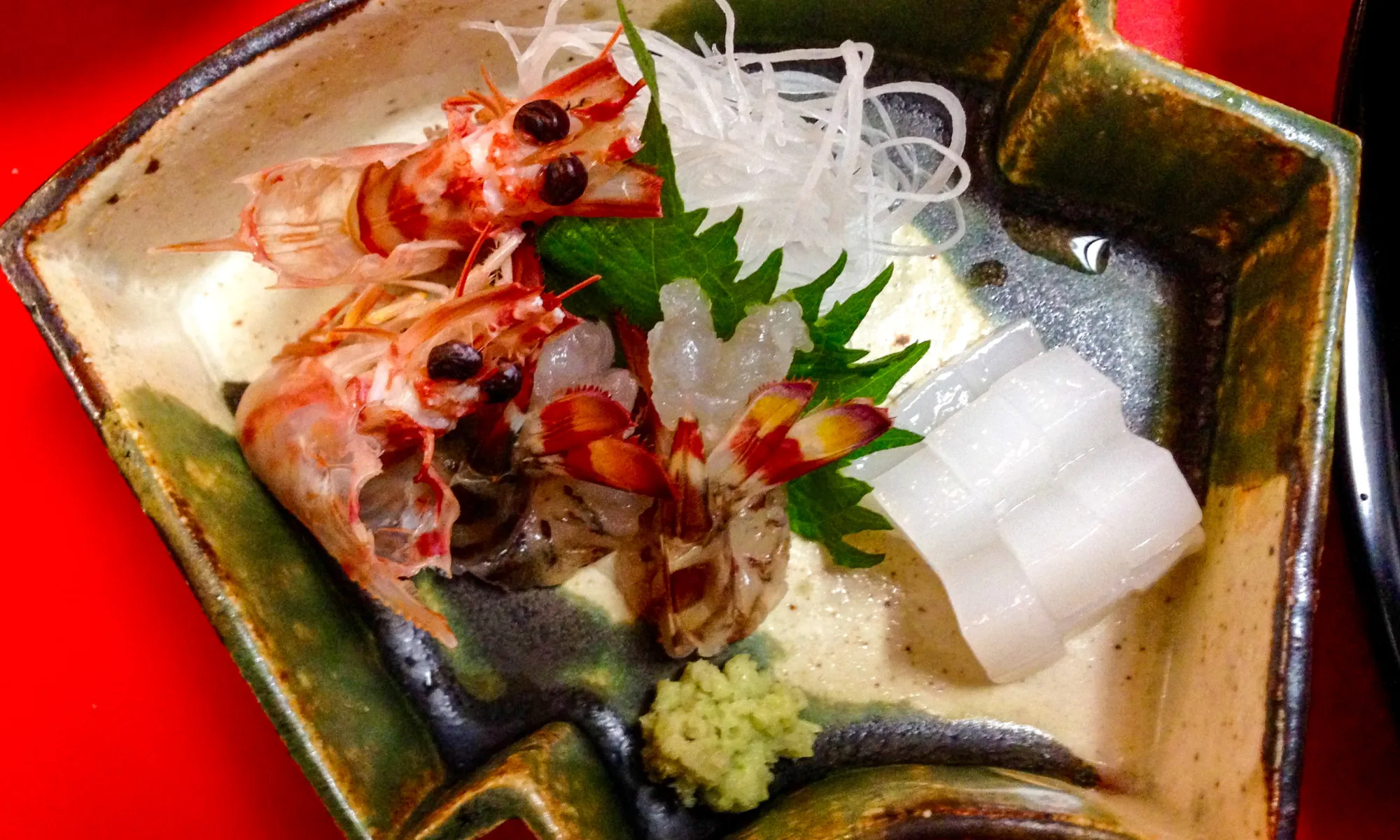
Japan has more Michelin-starred restaurants per capita than any country on earth. 414 stars across 200-something restaurants. But the real food education happens where the stars aren’t. On a plastic stool in a 4-seat ramen bar at 11pm. Standing at a counter in Tsukiji at 5am. In a 7-Eleven at 3am buying an egg sandwich that ruins all other egg sandwiches for you.
This isn’t a restaurant list. This is how to eat in Japan like the experience rewires your brain. Here’s the straight truth.
1. The Konbini Revelation: Why 7-Eleven in Japan Is Not What You Think
You’ll hear travel snobs say “don’t waste time in convenience stores.” Ignore them. Japanese konbini (convenience stores) are a culinary category of their own. FamilyMart, Lawson, 7-Eleven — they run the country’s most efficient food supply chain.
Here’s what you need to know. The onigiri (rice balls) are made fresh daily. The egg sandwich — tamago sando — uses a specific Japanese milk bread called shokupan that’s pillowy, slightly sweet, and holds together without getting soggy. The fried chicken (FamiChiki at FamilyMart, Karaage-kun at Lawson) is better than 90% of American fast food chicken. Period.
Specific products to look for:
- 7-Eleven Premium Gold Roast Coffee — ¥100, freshly ground beans, you press the cup against a machine. Best ¥100 you’ll spend.
- Lawson’s Uchi Café Sweets — the roll cake (mille crepe) is ¥300 and uses real Hokkaido cream. Not a joke.
- FamilyMart’s FamiChiki — bone-in or boneless, seasoned with garlic and soy, fried to order in-store. ¥250.
Mistake to avoid: buying onigiri and not eating it within 2 hours. The nori (seaweed) gets chewy. Eat it immediately after buying.
Konbini food exists because Japanese apartments are small. People eat on the go. It’s not a compromise. It’s a deliberate food system designed for speed and quality. Respect it.
2. Standing Ramen: The 8-Minute Education
Forget the tourist queues at Ichiran in Shibuya. The real ramen experience is a standing bar in a train station underpass. You eat. You leave. No lingering. No photos. No talking.
Here’s the unspoken rule: ramen is fast food in the original sense. Noodles go from cooked to soggy in under 4 minutes. The broth cools fast. The pork slice loses its warm fat quickly. You have about 8 minutes from bowl-in-front-of-you to empty bowl. Use them.
Three ramen styles you need to try:
- Tonkotsu (Hakata-style, Fukuoka) — pork bone broth boiled for 18+ hours until it’s milky white and coats your lips. Thin straight noodles. Rich, heavy, addictive.
- Shoyu (Tokyo-style) — clear soy sauce-based broth with chicken stock. Lighter. More aromatic. Often topped with a soft-boiled ajitama egg.
- Miso (Sapporo-style) — fermented soybean paste broth, thick and savory, with corn and butter on top. Yes, butter. It works.
Real shops to know: Ichiran (nationwide, solo booths, consistent), Ippudo (global chain but original Hakata style is legit), Ramen Nagi (butter-tinged noodles in Shinjuku).
Failure mode: ordering extra toppings you don’t need. The bowl is already complete. Adding corn, extra pork, and an egg turns ¥900 into ¥1,500 and ruins the balance. Eat the bowl as designed.
3. Kaiseki: The Most Expensive Meal You’ll Never Finish
Kaiseki is not dinner. It’s a sequence. 7 to 14 courses, each one smaller than the last, each one built around a single seasonal ingredient. The chef decides what you eat. You shut up and trust them.
The structure is rigid. First comes sakizuke (one-bite appetizer). Then mukozuke (sashimi, sliced so thin you see through it). Then yakimono (grilled fish). Then shokuji (rice, pickles, miso soup at the end). Every course has a specific temperature, texture, and vessel. The plate matters as much as the food.
Real kaiseki in Kyoto: Kikunoi (three Michelin stars, ¥30,000+ per person, reservation required 3 months ahead). Gion Karyo (two stars, ¥15,000 lunch, more accessible). Hyotei (14th-generation restaurant, ¥25,000 dinner, in a 400-year-old teahouse).
What nobody tells you: you will be hungry after kaiseki. The portions are tiny. That’s the point. Kaiseki is about precision and seasonality, not fullness. Eat a konbini onigiri before you go. I’m serious.
Tradeoff: kaiseki is expensive and slow (2-3 hours). If you want volume and speed, go to an izakaya instead. If you want to understand Japanese culinary philosophy, this is it.
4. Izakaya: The Japanese Pub Where You Order Wrong on Purpose
Izakaya is the Japanese equivalent of a gastropub crossed with tapas. Small plates, shared table, cheap drinks, loud atmosphere. You go with 3-4 people. You order 8-10 dishes. You drink beer, sake, or shochu. You stay 2-3 hours.
The right way to order: start with edamame and a beer. Then yakitori (grilled chicken skewers — negima is thigh+scallion, tsukune is meatball). Then karaage (fried chicken with lemon). Then sashimi (whatever is fresh that day). Then okonomiyaki (savory cabbage pancake) or takoyaki (octopus balls). End with ochazuke (rice in green tea) to settle the stomach.
Real izakaya chains that don’t suck: Torikizoku (¥350 per skewer, nationwide, no frills, fast), Gonpachi (the “Kill Bill” restaurant in Nishi-Azabu, touristy but the food is solid), Omoide Yokocho (Piss Alley in Shinjuku — tiny stalls, grilled everything, smoke in your eyes, perfect).
Mistake to avoid: ordering everything at once. Izakaya is meant to be paced. Order 2-3 dishes, eat, drink, order more. The kitchen times the food to come out in waves. Ordering 10 dishes at once means cold food and a crowded table.
When NOT to go to an izakaya: if you want quiet conversation or a romantic dinner. Izakaya is loud. People smoke (still legal in many places). It’s messy. It’s fun. It’s not fine dining.
5. Conveyor Belt Sushi: The Quality Gap Is Huge
Kaiten-zushi (conveyor belt sushi) ranges from “I’d rather eat a gas station sandwich” to “this is better than some high-end sushi restaurants.” The difference is the chain and the time of day.
Good chains: Sushiro (¥100-¥500 per plate, nationwide, uses AI to track which plates sell and stops making slow-moving items), Kura Sushi (¥100 per plate, every 5 plates you get a gacha prize, surprisingly fresh fish), Hama-Sushi (slightly higher quality, ¥150-¥600, better rice).
Bad chains: anything in a tourist-heavy area that looks like a theme restaurant. The fish sits too long. The rice is dry. The wasabi is fake.
The trick: sit near the kitchen. Watch what the regulars order. If a Japanese person takes a plate off the belt, it’s fresh. If they order directly from the tablet (every chain has one now), the kitchen makes it fresh. Always order from the tablet for the best quality.
Specific order every time: maguro (tuna, lean), sake (salmon, fatty), hamachi (yellowtail), uni (sea urchin if it’s ¥300+, skip it if ¥100), tamago (egg — a test of the chef’s skill, if it’s fluffy and slightly sweet the restaurant is serious).
Failure mode: eating the gunkan (seaweed-wrapped rolls) that have been circling for 20 minutes. The nori gets chewy. Order fresh.
6. Tsukiji vs. Toyosu: Where to Eat Sushi at 5am
The inner wholesale market moved from Tsukiji to Toyosu in 2018. The outer market (restaurants, shops, stalls) stayed in Tsukiji. Here’s the truth: go to Tsukiji Outer Market for the experience, go to Toyosu for the sushi.
Tsukiji Outer Market is chaotic, crowded, and full of tourists eating grilled scallops on sticks. It’s fun. It’s not where you go for a life-changing sushi meal. The queues at Sushi Dai and Daiwa Sushi are 3+ hours and the quality is good but not worth that wait. Skip them.
Toyosu is cleaner, quieter, and the sushi is objectively better. Sushi Dai has a second location here with shorter lines. Kyubey (a Ginza institution) opened a Toyosu location. The fish is hours fresher because the auction happens right there.
What to actually do: go to Tsukiji Outer Market at 7am. Eat tamagoyaki (grilled egg, ¥100 from Marutake), grilled eel (unagi skewer, ¥500), fresh wasabi (grated on a sharkskin grater, buy a small piece for ¥300). Then walk to Toyosu (15 minutes) for the sushi omakase at 9am.
Mistake to avoid: buying the “fresh” wasabi powder in Tsukiji. It’s not wasabi. It’s horseradish dyed green. Real wasabi costs ¥3,000+ for a small root and is only sold whole.
7. The Unspoken Rules: How Not to Offend Your Chef
Japanese food culture has rules. Some are obvious. Some will get you silently judged. Here’s the short version.
| Rule | Why | What to do instead |
|---|---|---|
| Don’t rub chopsticks together | Implies the restaurant uses cheap, splintery chopsticks. Insulting. | Just separate them quietly. |
| Don’t pass food chopstick-to-chopstick | Mimics a funeral ritual where bones are passed between family members. | Place food on the small plate, then pick it up. |
| Don’t pour your own drink | In izakaya, you pour for others and they pour for you. Self-pouring looks greedy. | Pour for the person next to you. They’ll reciprocate. |
| Don’t leave chopsticks standing upright in rice | Funeral incense offering. Bad luck. | Rest them on the chopstick holder (hashioki). |
| Slurp noodles loudly | Shows appreciation. Also cools the noodles and aerates the broth. | Slurp. It’s not rude. It’s correct. |
One more thing: tipping is not a thing. Don’t try. Leave money on the counter. Walk away. The chef will bow. That’s the transaction.
Japan’s food culture is not complicated. It’s precise. Every rule exists for a reason — respect for ingredients, respect for the chef, respect for the people eating with you. Follow the rules and you’ll eat better than 99% of tourists. Break them and you’ll still eat well, but you’ll miss the point.
For the best single meal in Japan: omakase at a 2-star sushi place in Ginza (¥15,000-¥25,000, 12-15 pieces, 45 minutes). For the best value: standing ramen at a train station (¥800, 8 minutes, life-changing broth). For the best experience: izakaya with 3 friends in Omoide Yokocho (¥4,000 each, 3 hours, memories that last).