
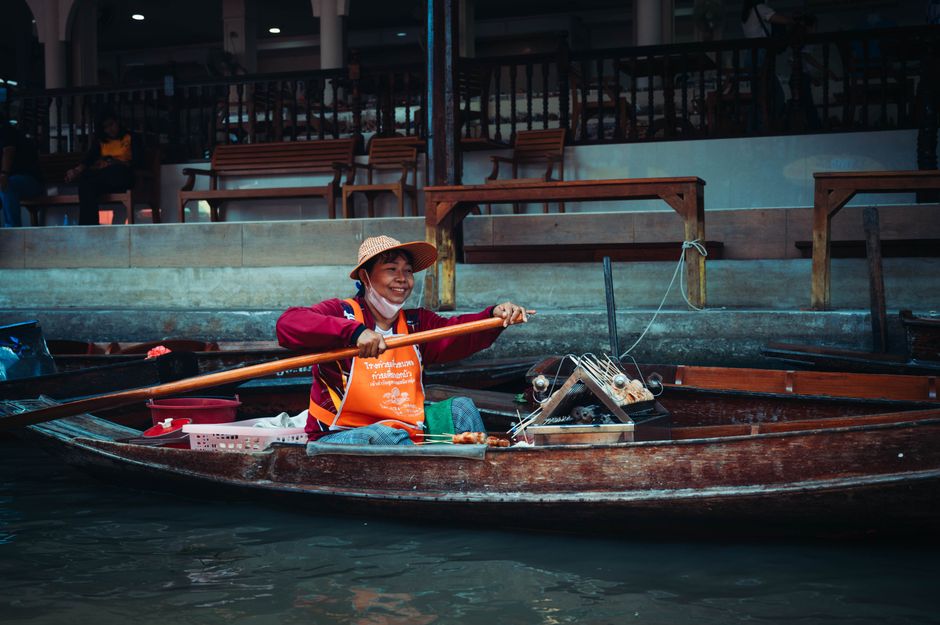
Most people think the risk with Thai street food is the food. It’s not. The risk is your own decision fatigue. After three days of walking past 40 stalls per block in Bangkok, you start eating at the first place that looks “busy enough” instead of the place that’s actually clean. That’s how you get sick. Not because Thai street food is dangerous—because tired travelers make lazy choices.
I’ve eaten street food in Thailand across six trips, including a month-long stay in Chiang Mai where I ate from carts almost daily. I got sick once. It was my fault. I broke my own rules at 11pm near Khao San Road because I was hungry and impatient. The stall had pre-cooked satay sitting under a dim heat lamp, and the oil smelled like it hadn’t been changed in days. I knew better. I ate it anyway.
This article is the filter I wish someone had given me before that night. Not a list of “best street food dishes”—you can find that anywhere. This is about reading stalls, understanding what’s actually risky in 2026, and knowing when to walk away.
The Stall Selection Filter: What Actually Predicts a Safe Meal
Here’s the thing nobody tells you: the most popular stall is not always the safest. Popularity means high volume, which means ingredients turn over fast—that’s good. But popularity also means the cook is under pressure, and shortcuts happen. The sweet spot is a stall that’s busy but not chaotic.
My filter has three parts:
- Turnover rate. Watch the stall for two minutes before ordering. Are multiple people getting food within that window? If yes, ingredients are cycling. If the wok sits empty and the cook is scrolling their phone, the oil is old and the meat has been sitting.
- Oil color. This is the single most reliable visual signal. Fresh oil is golden and translucent. Oil that’s been reused for hours turns dark brown and slightly cloudy. Dark oil isn’t just about taste—it’s about oxidation compounds that can genuinely upset your stomach even if the food is fully cooked.
- Prep surface visibility. Can you see where the raw ingredients are stored? If raw chicken is sitting next to cooked noodles with no separation, that’s a cross-contamination red flag. The best stalls keep raw and cooked visibly separated, even in tiny spaces.
One more thing: ice is not the enemy. Commercial ice in Thailand comes from filtered water factories, and it’s generally safe. The bigger risk is the glass it’s served in. If a stall washes glasses in a bucket of water you can see is gray, order a bottle.
What the Michelin Bib Gourmand Actually Tells You
The Michelin Guide has been covering Bangkok street food for years now, and it’s genuinely useful—but not for the reason most people think. A Bib Gourmand doesn’t mean “safe.” It means “consistently good food at a reasonable price.” What it does signal is that the stall has been vetted for consistency, which usually correlates with better hygiene practices. Stalls like Jay Fai (the famous crab omelet spot) and Thipsamai (pad thai institution) have been Michelin-recognized for years. They’re also expensive by street food standards—Jay Fai’s crab omelet runs 1,000+ baht now. The Michelin recognition isn’t a safety guarantee, but it does mean the stall has survived scrutiny, which filters out the worst operators.
Dish-Specific Risk: Not All Street Food Is Equally Dangerous
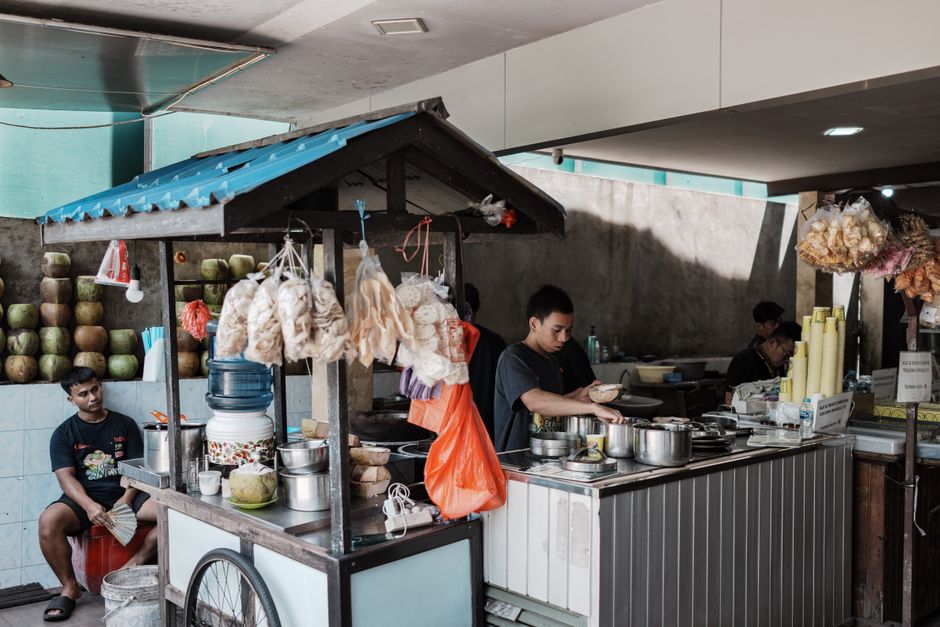
This is where most “street food safety” advice falls apart. It treats all dishes as equally risky, which is nonsense. A bowl of hot noodle soup is fundamentally different from a plate of pre-cooked som tam.
| Dish | Risk Level | Why | What to Check |
|---|---|---|---|
| Noodle soup (guay tiew) | Low | Broth boils continuously, killing bacteria | Broth should be visibly bubbling |
| Pad thai / fried noodles | Low-Medium | High-heat wok cooking, but oil quality matters | Oil color, wok temperature |
| Som tam (papaya salad) | Medium | Raw ingredients, no heat step to kill bacteria | Watch if the mortar is rinsed between orders |
| Grilled skewers (moo ping, satay) | Medium-High | Pre-cooked and held at unsafe temps | Are they grilling to order or reheating? |
| Pre-cut fruit | Medium | Washed in tap water, sitting in heat | Buy whole fruit and peel it yourself |
| Raw shellfish (hoy kraeng) | High | Raw seafood in tropical heat | Just skip this one unless you’re at a reputable restaurant |
The pattern is obvious: heat kills, time hurts. Dishes cooked to order at high temperature are consistently safer than anything pre-cooked or raw. This isn’t fear-mongering—it’s just how food safety works at 35°C with no refrigeration.
My personal rule: I eat anything cooked to order, I’m selective with raw salads, and I skip pre-cooked meat that’s been sitting for more than an hour. I’ve never gotten sick following this rule. The one time I broke it, I paid for it.
Location Matters More Than You Think
Not all street food districts are equal. The stall’s physical location tells you a lot about its operating standards.
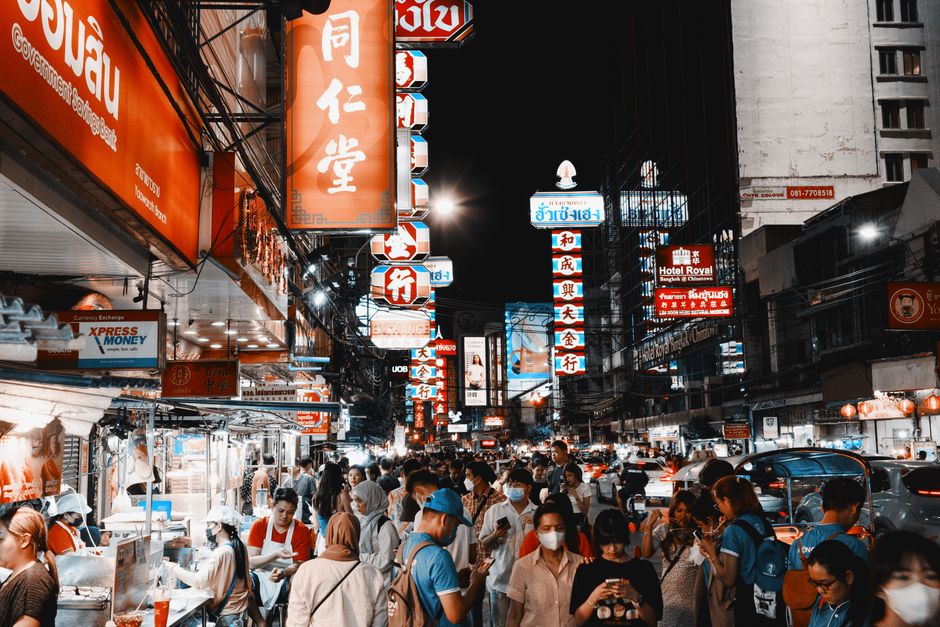
Bangkok’s Yaowarat Road (Chinatown) is the gold standard for street food density and quality. Stalls here are packed in, which means competition is brutal. A stall that’s been on Yaowarat for years has survived because locals keep coming back. The turnover is high, the ingredients are fresh, and the standards are generally excellent. You’ll find some of the best food in the city here, including the famous Nai Ek Roll Noodle and the crab fried rice at Plaeng Nam.
Khao San Road, on the other hand, is where I got sick. The stalls there cater to backpackers who won’t be around long enough to build a reputation. The incentive structure is different: sell to tourists once, not to locals repeatedly. That changes everything about how a stall operates.
Chiang Mai’s Sunday Night Market and the North Gate food stalls are generally solid, but the same principle applies—look for stalls where Thai locals are eating, not just foreigners. At the North Gate, the Khao Kha Moo Chang Phueak (braised pork leg) stall has a permanent line of locals that starts before they open. That’s the signal you want.
The 2026 Factor: What’s Actually Changed
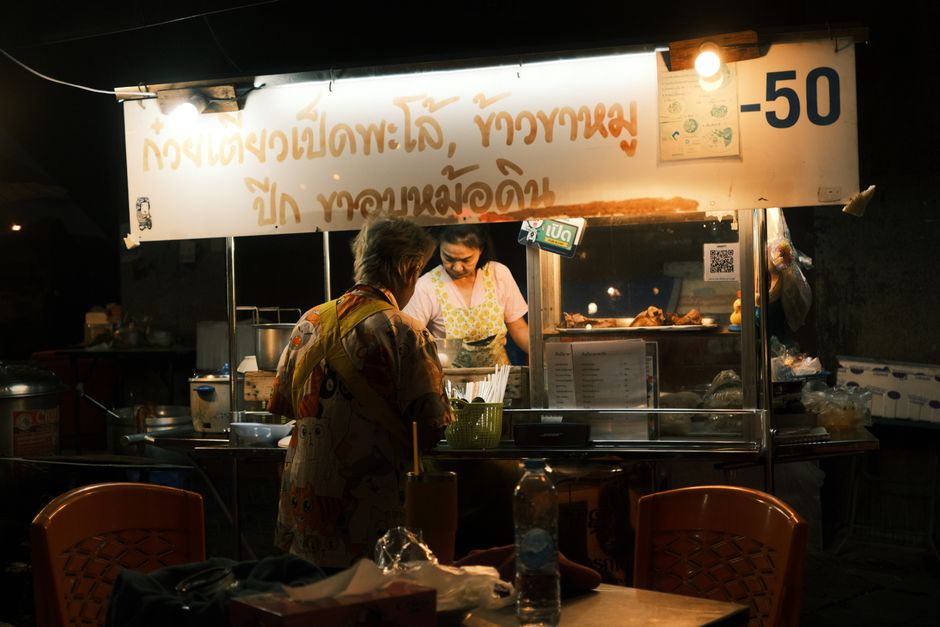
Thailand’s street food scene shifted after 2026, and the effects are still visible in 2026. Some of the older vendors didn’t survive the downturn. Others moved to more permanent shopfronts. The romanticized image of Bangkok as a city where every street is lined with carts is less accurate now—many vendors operate from semi-permanent setups with better infrastructure.
This is actually good news for food safety. The vendors who survived tend to be the ones with loyal local followings, which means better standards. The ones who were always marginal are gone.
What hasn’t changed: the fundamental risk profile of street food. It’s still about turnover, heat, and time. The 2026 traveler has better tools—Google Maps reviews from locals, food blogs with current information—but the core decision-making is the same as it was ten years ago. Watch the stall. Check the oil. Order food that’s cooked in front of you.
When to Skip the Street Stall Entirely
Street food is not a religion. There are times when it’s genuinely the wrong choice, and pretending otherwise is how people get sick.
If you have a compromised immune system, are pregnant, or are traveling with young children, the risk calculus changes. A child who gets food poisoning in Thailand loses days of a trip and might need medical care. The Samitivej Sukhumvit Hospital in Bangkok has an excellent international clinic, but nobody wants to spend their vacation there. In these cases, eat at established restaurants with visible hygiene standards. The food will still be good. You’re not missing some essential experience by skipping the cart.
If you’re on a short trip (3-4 days) with a packed itinerary, getting sick is more costly than on a month-long stay. The risk of any single street food meal is low, but the cost of food poisoning is high when you’ve only got 72 hours.
And if you’re in a tourist-only area where no locals are eating, just don’t. Walk ten minutes in any direction and you’ll find better food at lower prices.
The question isn’t really “is Thai street food worth the risk?” It’s “are you willing to spend two minutes reading a stall before you order?” If the answer is yes, the risk drops dramatically. If you’re too tired or hungry to care, that’s when you should eat at a restaurant instead.